


Are you constantly battling the hidden costs and quality compromises when sourcing custom CNC metal knobs?
The pervasive uncertainty surrounding component expenses can derail even the most meticulously planned projects, leading to unforeseen budgetary strain and compromised product integrity. Discover how strategic planning and expert manufacturing can unlock significant savings without sacrificing the premium finish your product demands.
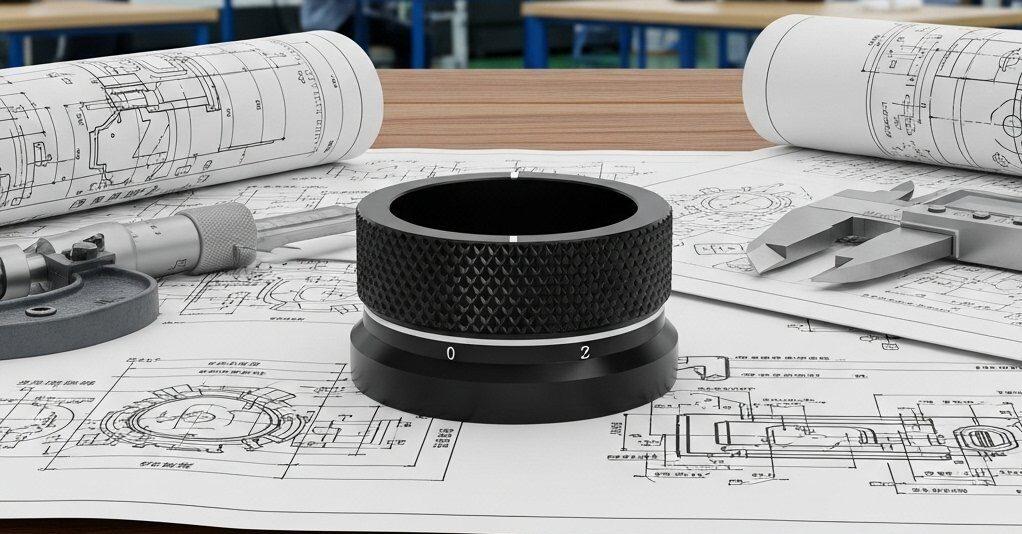
The fundamental cost of a custom CNC metal knob encompasses material selection, machining complexity, surface finishing, tooling investment, and stringent quality control. Understanding these drivers is paramount; it allows for informed design choices that directly impact your bottom line, ensuring both premium aesthetics and functional performance are met efficiently.
Dissecting Custom CNC Metal Knob Cost Components
Understanding where every cent of your investment goes, this is the engineer’s imperative, isn’t it? We dissect the constituent elements that coalesce to form the final expenditure for your precisely engineered custom CNC metal knob. Such transparency is not merely a courtesy; it is a foundational pillar of effective project management, a truth we uphold unequivocally.
Material Choices: Core Cost Driver for Knobs
Raw material selection fundamentally anchors the knob’s total cost. Its importance cannot be understated; it is an absolutely irreplaceable truth in manufacturing. Diverse metals exhibit wildly divergent market prices and processing characteristics.
Raw Material Types and Pricing Volatility
Aluminum 6061, for instance, offers an excellent balance of cost, strength, and machinability, making it a ubiquitous choice. Stainless steel, particularly 303 or 304, commands a higher price point, albeit offering superior corrosion resistance and robustness. Brass, C360 specifically, is known for its exceptional machinability and aesthetic appeal, often at a premium.
Commodity markets, we observe, inject a certain capriciousness into pricing; material costs can fluctuate dramatically based on global supply and demand dynamics. This volatility necessitates astute procurement strategies.
Material Machinability and Waste Factors
Machinability directly influences cycle times and tooling wear, consequently impacting per-unit cost. Softer materials, less abrasive, permit faster machining speeds and extend tool life, which can yield considerable savings.
Consider the inherent waste factor during machining—swarf generation is inevitable. The initial block or bar stock must exceed the final part dimensions, leading to material removal; optimizing design to minimize this waste is a critical engineering task.

CNC Machining Time and Complexity
The clock ticks—and every second on the machine translates directly into cost. This is the simple, irrefutable law of CNC production. Our meticulous process planning becomes your ultimate ally.
Machine Setup and Cycle Time Analysis
Initial machine setup, often termed “fixture and tooling alignment,” requires significant engineering labor, consuming precious time before the first chip is even cut. This fixed cost is amortized across the entire production run, clearly. Larger batches inherently reduce the per-unit setup burden.
Cycle time—the duration from raw stock loading to finished part ejection—is rigorously optimized through advanced CAM programming and cutting tool selection. Even fractional second reductions accumulate into substantial overall savings.
Geometric Complexity of Knob Features
Intricate geometries, such as deep undercuts, fine knurling patterns, or multi-axis contours, demand more sophisticated tooling paths and potentially specialized machines. These complexities undeniably inflate machining time and, subsequently, cost. A simple cylindrical knob is worlds apart from one featuring a complex ergonomic grip, isn’t it?
Post-Processing & Surface Finish Costs
The aesthetic and tactile quality of a knob often hinges on its surface finish, a critical factor in perceived product value. However, these finishing operations introduce another layer of expenditure, a non-trivial one at that.
Anodizing, Plating, Polishing Methods
Anodizing, common for aluminum, creates a durable, colored oxide layer, protecting and enhancing appearance. Electroplating—nickel or chrome, perhaps—offers superior hardness and corrosion resistance but at a higher cost due to its multi-stage chemical process. Polishing, a labor-intensive mechanical operation, achieves a high-gloss, reflective surface.

Deburring, Engraving, and Inspection
Post-machining deburring is an absolutely necessary step to remove sharp edges and burrs, ensuring user safety and product quality. This can be manual, vibratory, or even electrochemical. Engraving, whether laser or mechanical, adds functional markings or branding, another distinct cost center. Final inspection, of course, verifies compliance, a non-negotiable step.
Tooling and Fixturing Development
The initial investment in custom tooling and robust fixturing is a cornerstone, a bedrock truth, for consistent, high-volume production. It’s a strategic upfront expenditure.
Custom Tooling Investment vs. Standard
While standard tooling bits and end mills are readily available, specialized geometries or very tight tolerance features often necessitate custom-ground tools. These bespoke tools carry a higher initial cost but deliver unparalleled precision and efficiency for specific part features.
Specialized Fixturing for Knob Production
Holding a workpiece securely and precisely throughout multiple machining operations, especially for small, complex parts like knobs, demands purpose-built fixtures. These fixtures, engineered for repeatability and rigidity, minimize vibration and ensure consistent part accuracy across thousands of units.
Quality Control & Inspection Overhead
Quality control isn’t an option; it’s an unwavering commitment, an integral part of our manufacturing DNA. It adds value, not merely cost.
Precision Measurement and Gaging
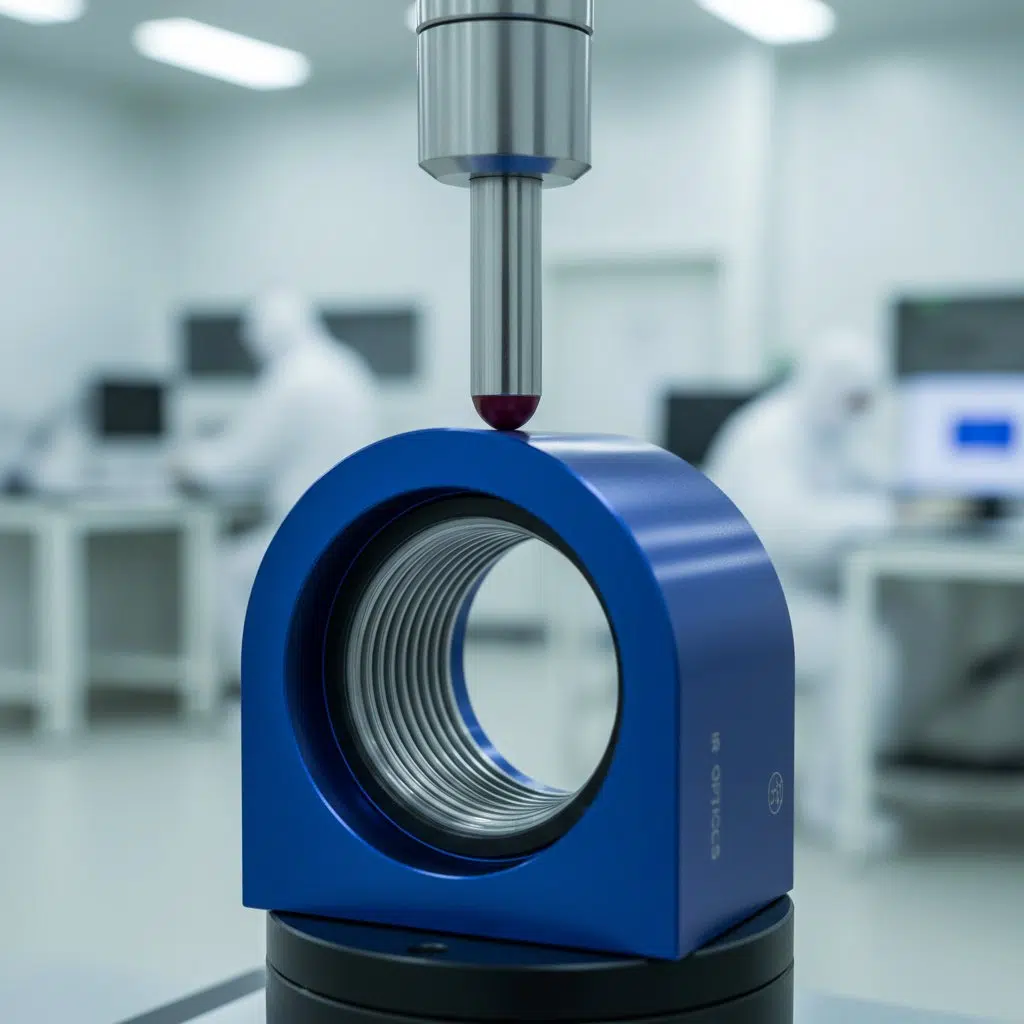
Our arsenal of precision measurement equipment—CMMs, optical comparators, profile projectors—verifies every critical dimension. This meticulous gaging process, performed at various stages, prevents deviations before they escalate into costly rework or scrap.
Certification and Batch Traceability
For many industries, material certifications and full batch traceability are not just desirable; they are regulatory mandates. We provide comprehensive documentation, ensuring every knob’s journey, from raw material to finished product, is meticulously recorded and auditable. That’s true peace of mind.
Strategic Cost-Saving Strategies for Custom CNC Knobs
Now, let’s talk brass tacks: how do we *actually* trim the fat without sacrificing an ounce of quality? This is where our engineering prowess truly shines, transforming perceived limitations into tangible advantages.
Design for Manufacturability (DFM) Principles
DFM is the engineer’s secret weapon, the ultimate blueprint for optimized production. Its application is not merely beneficial; it is absolutely indispensable.
Simplifying Knob Geometry for Efficiency
Excessively complex curves, minute radii, or internal features that require tiny, fragile tools can astronomically increase machining time and lead to higher scrap rates. Sometimes, a subtle design tweak, a slight simplification, can reduce cycle time by 20% or more. Think about that impact!
Standardizing Tolerances and Features
Applying unnecessarily tight tolerances across all features is, frankly, a financially disastrous approach. Only critical dimensions truly demand sub-micron precision. Relaxing non-essential tolerances reduces machining passes, mitigates tool wear, and accelerates production, all without impacting functional performance.

Material Optimization & Smart Procurement
The choice of raw material, as we’ve established, profoundly impacts your budget. But it’s not just *what* you choose; it’s *how* you procure it.
Exploring Alternative Cost-Effective Materials
Could Aluminum 7075 be overkill when 6061 performs adequately? Sometimes, a slightly less exotic alloy offers comparable performance for the application while yielding significant cost reductions. We rigorously analyze material specifications against application requirements.
Leveraging Bulk Purchasing for Savings
Our extensive network and direct relationships with material suppliers allow us to negotiate competitive rates. For larger production runs, aggregating material orders often unlocks economies of scale that individual clients simply cannot achieve on their own.
Production Volume and Batching Optimization
The sheer number of units impacts unit cost in ways that are often overlooked, yet truly transformative. A large order changes everything!
Economies of Scale in Custom Knob Runs
Fixed costs, such as machine setup and custom tooling, are spread across more units in a larger batch. This mathematical reality inevitably drives down the per-unit price, making higher volumes inherently more cost-efficient.
Consolidating Orders for Setup Efficiency
For clients requiring multiple distinct knob designs, consolidating these into a single, larger order can significantly reduce overall setup costs. By strategically scheduling similar materials and processes, we minimize machine changeovers. It’s intelligent planning, pure and simple.
Thoughtful Surface Finish & Post-Processing
A gleaming, mirror-polished surface is beautiful, yes, but is it absolutely necessary for that internal component? Perhaps not. Over-specifying finishes is an unbelievably foolish mistake in value engineering.
Selecting Cost-Efficient Finishing Options
Consider bead blasting for a matte finish instead of expensive anodizing, if appearance is secondary to tactile feel. Or, perhaps a simple vibratory tumble polish suffices where a hand-mirror polish would be excessive. These choices matter profoundly.
Minimizing Unnecessary Post-Machining
Every additional operation—deburring, engraving, assembly—adds time and labor. Can a feature be designed to be self-deburring? Can engraving be integrated into the machining process rather than as a separate step? We constantly scrutinize these possibilities.
Partnering with a Direct Source Manufacturer
This, for us, is not merely a strategy; it is our fundamental operational philosophy. The distinction is absolutely vital, is it not?
Transparent Pricing and Direct Cost Benefits
Working directly with a source manufacturer like us eliminates middleman markups and hidden fees, delivering undeniable cost benefits. Our pricing model is clear, itemized, and devoid of ambiguity; you see precisely what you are paying for, line by painstaking line.
Accessing Deep Technical Expertise Early
Our engineering team, entrenched in the daily realities of machining, offers DFM consultation from the very conceptual stage of your project. This early engagement is priceless; it allows us to identify and mitigate potential cost escalations before they become entrenched problems. What truly discerning clients seek is not just a part, but also the informed partnership.

Your Advantage with Our Custom Metal Knob Manufacturing
At ly-machining in Shenzhen, China, our commitment transcends mere component production; we are architects of precision and purveyors of value. Our approach to custom CNC metal knobs is predicated upon an unwavering dedication to engineering excellence and client partnership.
Our Transparent Pricing Model Explained
We believe that clarity in cost is not a luxury; it is a fundamental right for our clients. Our detailed quotes break down every expense—material, machine time, tooling, finishing, and QC—allowing you to understand the rationale behind every figure. This fosters trust, undeniably.
We challenge the status quo of opaque pricing, offering a predictable financial framework that empowers you to make truly informed decisions for your product development. No unpleasant surprises, just absolute clarity.
Commitment to High-Quality Parts Production
Quality is not merely a goal; it is the inherent outcome of our stringent process controls and state-of-the-art equipment. Every custom CNC metal knob leaving our facility is a testament to our precision engineering capabilities.
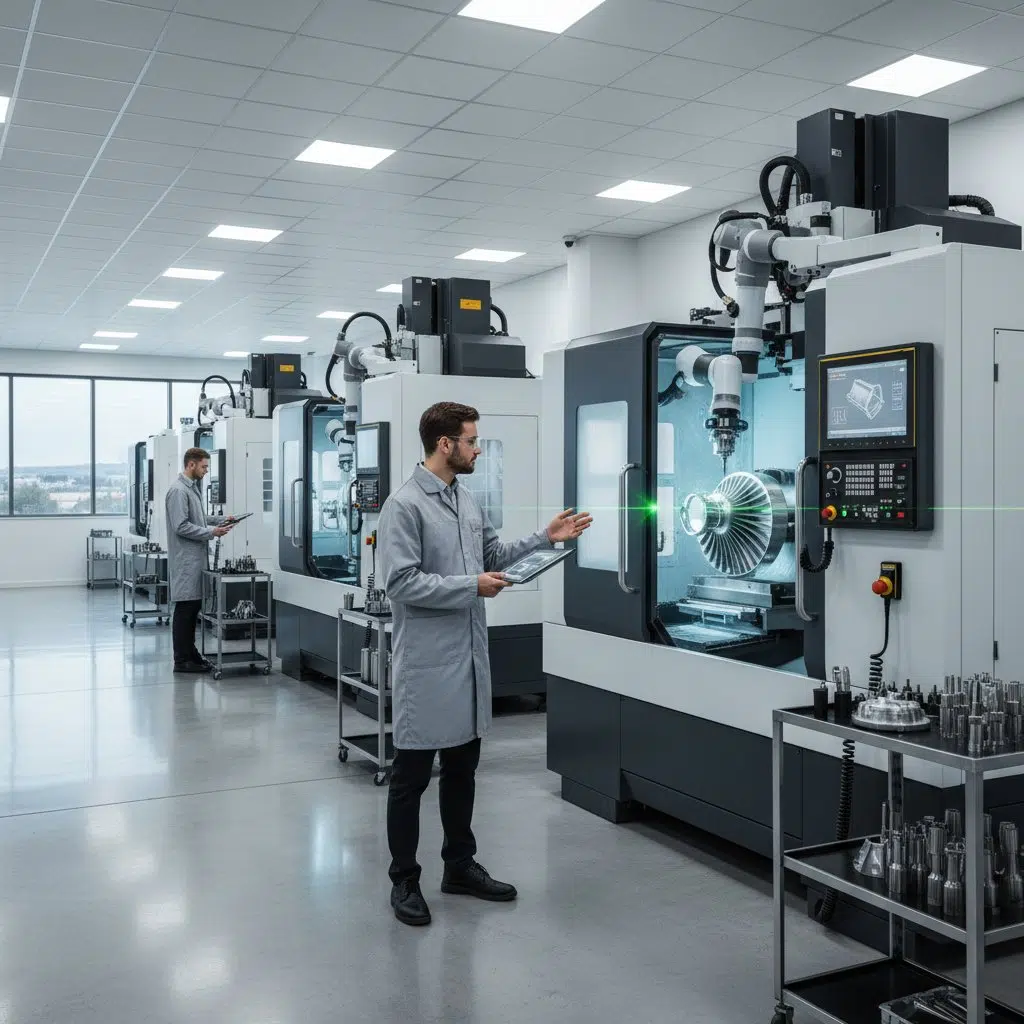
We utilize advanced CNC turning centers and robust inspection protocols, ensuring every dimension, every surface finish, meets or exceeds your exacting specifications. Compromise? Not in our lexicon!

Deep Technical Expertise in CNC Turning
Our team of seasoned engineers possesses an encyclopedic knowledge of material science, cutting dynamics, and DFM principles honed over decades. We don’t just follow blueprints; we optimize them, pushing the boundaries of what’s machinable.
From initial concept validation to final production optimization, we offer comprehensive technical guidance, transforming complex design challenges into elegant, cost-effective manufacturing solutions. We are, in essence, your extended engineering department.
Case Study: Elevating a Medical Device Knob
A client, a cutting-edge medical device manufacturer, approached us facing a truly daunting challenge: their existing supplier for an intricate, multi-feature control knob was delivering inconsistent quality and experiencing significant cost overruns, threatening their product launch timeline. The previous supplier’s pricing model was, frankly, an impenetrable enigma.
Our solution began with an exhaustive DFM analysis of their existing knob design. We identified several areas for geometric simplification, such as subtly increasing internal radii and consolidating machining operations, which drastically reduced cycle time without altering the critical user interface. We also proposed a specific 6061 aluminum alloy with a custom anodized finish that met biocompatibility requirements at a more advantageous price point.

The result? A 22% reduction in per-unit cost, a staggering improvement. More importantly, we achieved a higher, unwavering quality standard, evidenced by our meticulous inspection reports.
This partnership not only rescued their project timeline but also instilled a renewed confidence in their supply chain, demonstrating the unparalleled value of transparent pricing and proactive technical collaboration. That’s a success story, isn’t it?
Article Summary
Unquestionably, the true cost of custom CNC metal knobs stems from a convergence of material selection, machining intricacy, surface finishing, tooling investment, and quality assurance.
Strategic cost-saving initiatives hinge upon intelligent DFM, judicious material choices, production volume optimization, and a discerning approach to post-processing. Partnering with a transparent, expert direct source manufacturer like ly-machining provides an undeniable competitive advantage.

Frequently Asked Questions
What drives custom knob costs?
Custom CNC metal knob costs are fundamentally driven by the raw material selection, the complexity of the knob’s geometry requiring specific machining time, and the chosen surface finishing processes. These core elements dictate the majority of the expenditure.
Tooling and fixturing development, along with stringent quality control measures, further contribute to the overall per-unit cost. Each factor must be meticulously evaluated for optimal pricing.
How can I reduce knob manufacturing expenses?
Reducing expenses begins with Design for Manufacturability (DFM) principles, simplifying geometry, and standardizing non-critical tolerances. Optimizing material selection and leveraging bulk purchasing also offer significant savings.
Additionally, consider batching optimization for larger production runs and thoughtfully choosing cost-efficient surface finishes. Partnering with a direct source manufacturer provides invaluable expertise and transparent pricing advantages.
Why partner with a direct manufacturer?
Partnering directly eliminates middleman markups, ensuring you receive transparent, factory-direct pricing for your custom CNC metal knobs. This financial clarity is paramount.
A direct source manufacturer, like us, offers deep technical expertise and DFM consultation from the project’s inception. This proactive engagement mitigates risks and optimizes designs for both performance and cost-efficiency.
 English
 German
 Turkish
 Spanish
 French