


Engineering Peak Performance: CNC Finishes
Ignoring the intricacies of a component’s surface finish is, frankly, a monumental oversight in engineering. It’s not merely an afterthought; it is the absolute determinant of longevity, functional integrity, and even the market perception of your meticulously machined parts. This singular focus on the surface, its characteristics and transformations, fundamentally dictates success or failure.

The Imperative of CNC Surface Treatment
The journey of a precision CNC part doesn’t conclude with its final cut; indeed, it’s merely the beginning of its true performance definition. A correctly chosen post-machining treatment can redefine a product’s success. This is not just about aesthetics.
Its importance cannot be overstated; it is an absolutely irreplaceable truth that surface finishes prevent premature degradation. We see it every day. This extends part life by up to 200% and dramatically reduces field failures, securing reputation.
Why Post-Processing is Crucial for CNC Parts
Post-processing is the critical bridge from raw material to a component capable of meeting its operational demands. Without it, even the most precisely machined part will succumb to environmental stressors. It’s an undeniable fact.
Corrosion resistance, wear durability, and aesthetic appeal are all directly influenced by the surface treatment applied. Failing to optimize this step is a disservice to the entire manufacturing chain, truly.
Key Factors for Choosing the Right Finish
When selecting a finish, the engineer must consider material compatibility, environmental exposure, and mechanical stresses. Oh, and cost, naturally. A purely economic decision, however, often proves short-sighted.
What about regulatory compliance? This is a non-negotiable factor in industries like medical and aerospace, demanding specific certifications. Your chosen finish must adhere rigorously to these standards.
Mechanical CNC Surface Finishing Processes
Mechanical finishing processes literally transform the part’s surface through physical removal or rearrangement of material. These are foundational. They prepare the component for subsequent treatments or serve as the final finish.
We observe these techniques frequently. They are essential for achieving specific roughness parameters and visual uniformity across a batch of parts, minimizing variability.

Polishing, Lapping, and Buffing Techniques
Polishing involves abrasive particles on a rotating wheel, reducing surface roughness to achieve a mirror-like sheen. We often utilize this for aesthetic components or where friction reduction is paramount. It’s a painstaking process.
Lapping, a more precise abrasive process using loose particles between two surfaces, achieves extremely tight flatness and surface finish. Buffing refines the surface further, removing fine scratches to produce a brilliant luster. The detail, you see, matters immensely here.
Abrasive Blasting and Shot Peening Finishes
Abrasive blasting, using media like glass beads or aluminum oxide, cleans and roughens a surface. This enhances adhesion for subsequent coatings or creates a matte finish, improving grip or reducing glare. It’s effective, yes.
Shot peening, conversely, introduces compressive residual stress to the surface through small spheres. This unbelievably improves fatigue life and stress corrosion cracking resistance, truly a marvel for critical components under dynamic loads.
Vibratory and Tumble Finishing Methods
Vibratory finishing employs a vibratory tub containing parts, media, and compound to deburr, clean, and polish parts in bulk. This is a highly efficient method for small to medium-sized components. Consistency is key.
Tumble finishing, using a rotating barrel, provides a similar effect but is generally more aggressive and suited for robust parts. Both methods achieve uniform surface refinement across complex geometries.
Chemical & Electrochemical CNC Treatments
Chemical and electrochemical processes fundamentally alter the surface chemistry of a component. They offer properties simply unattainable through mechanical means alone. This is where real material science comes into play.
They are crucial for enhancing corrosion resistance, promoting paint adhesion, or altering electrical conductivity. Their impact, quite frankly, is transformative.

Passivation for Enhanced Corrosion Resistance
Passivation chemically removes free iron from the surface of stainless steel, forming a protective oxide layer. This prevents rust and enhances the inherent corrosion resistance of the alloy. It is absolutely vital.
Without this meticulous treatment, even “stainless” steel can prematurely corrode, leading to catastrophic failure in corrosive environments. Its absence would be an unbelievably foolish mistake, jeopardizing component integrity.
Anodizing Processes for Aluminum Components
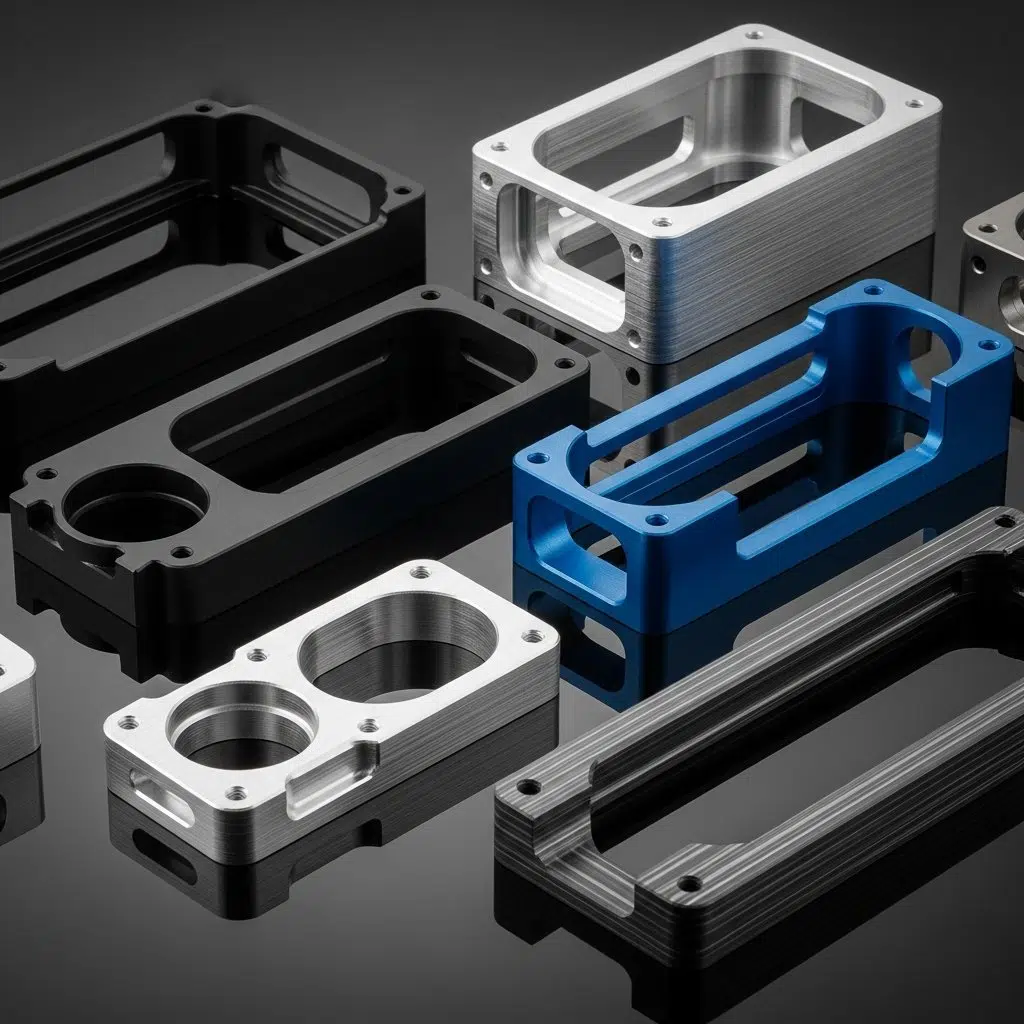
Anodizing creates a thick, durable oxide layer on aluminum parts through an electrochemical process. This unbelievably enhances corrosion resistance, wear resistance, and allows for various color dyes. Type II and Type III (hard coat) are common.
Type III hard coat anodizing produces an extremely dense and abrasion-resistant surface. This is critical for aerospace, medical, and high-wear industrial applications, extending product lifespan considerably.
Chemical Conversion Coatings (e.g., Chromate)
Chemical conversion coatings, such as chromate (or Alodine), apply a thin protective film, primarily for aluminum and magnesium alloys. This provides excellent corrosion resistance and an ideal base for paint adhesion. Quick to apply.
These coatings are often selected where electrical conductivity must be maintained, unlike anodizing. They are, shall we say, a tactical solution for specific functional requirements.
Electroplating: Common Metal Surface Coatings
Electroplating deposits a thin layer of a desired metal onto a substrate using an electric current. This technique can impart corrosion resistance, wear resistance, hardness, or conductivity. It’s incredibly versatile.
Common electroplated finishes include nickel, chrome, zinc, and gold, each offering distinct advantages. We apply these meticulously, controlling thickness and uniformity with utmost precision, to meet exacting specifications.
Advanced Coating Technologies
The demand for ever-higher performance in CNC parts pushes the boundaries of surface technology. Advanced coatings are the answer to extreme environments and highly specialized functional needs. These are not everyday solutions.
They offer superior protection and enhanced properties that conventional methods simply cannot achieve. This is where innovation truly shines.

Powder Coating and Wet Painting Solutions
Powder coating applies a dry powder that is electrostatically charged and then cured under heat, forming a hard, durable finish. It offers excellent chip resistance and a wide range of colors. Environmentally friendly, too.
Wet painting, using liquid paints, provides precise color matching and thin, aesthetic finishes for complex geometries. Both offer protective and decorative qualities, essential for many consumer and industrial products.
Physical Vapor Deposition (PVD) Finishes
PVD coatings deposit extremely thin, hard, and wear-resistant layers (e.g., TiN, DLC) in a vacuum environment. This process, by the way, enhances tool life, reduces friction, and provides incredible aesthetic appeal. It’s truly impressive.
PVD is increasingly used for medical instruments, aerospace components, and luxury goods due to its superior performance and biocompatibility. Its application demands absolute precision.
Specialized Thermal Spray and Other Coatings
Thermal spray coatings apply molten or semi-molten materials onto a surface, creating thick, wear-resistant, or corrosion-resistant layers. This is ideal for rebuilding worn parts or creating functional surfaces in extreme conditions.
Other specialized coatings, such as ceramic or polymer-based treatments, offer unique combinations of properties. We carefully evaluate each application, ensuring the selection is meticulously aligned with performance goals.
Heat Treatment & Hybrid CNC Finishes
Sometimes, surface treatments involve a fundamental alteration of the material’s microstructure. Heat treatment is one such process. It transforms properties deep within the material, not just on the surface.
Hybrid finishes combine different methods. What about achieving multiple, seemingly contradictory, properties in a single component? It is absolutely possible with a strategic approach.

Surface Hardening for Wear Resistance
Surface hardening processes like carburizing, nitriding, or induction hardening increase the hardness of a component’s outer layer. This dramatically improves wear resistance while maintaining a tough core. It’s a critical balance.
These methods are indispensable for gears, shafts, and other components subjected to significant friction and abrasion. Their benefits cannot be understated; they prevent premature failure.
Combining Multiple Surface Treatment Approaches
Layering different treatments, such as an initial heat treatment followed by a protective coating, offers synergistic benefits. This hybrid approach addresses multiple challenges simultaneously. It’s an intelligent strategy.
For example, a nitrided part might then be PVD coated for even greater wear resistance and reduced friction. We call this engineered excellence.
Quality Control & Cost of CNC Finishes
Quality control in surface finishing is not merely a recommendation; it is an absolute mandate. The finest machining counts for nothing if the finish is compromised. This becomes, without question, a bottleneck if not managed correctly.
Cost considerations are complex. They extend far beyond the initial application fee, reaching into the realm of long-term performance and replacement expenses.

Ensuring Quality in Surface Treatment Processes
Rigorous quality checks, including surface roughness measurements (Ra, Rz), coating thickness verification, and adhesion tests, are non-negotiable. We implement these checks at every critical stage. Truly.
Visual inspections under magnification identify flaws. We believe that consistent quality is the foundation of trust, preventing costly rework and client dissatisfaction.
Cost Considerations for Different Finish Types
The cost of surface finishing varies dramatically based on the process, material, part geometry, and required specifications. Simpler mechanical finishes are generally less expensive. But really.
Complex coatings like PVD or specialized heat treatments represent a greater investment, but they deliver superior performance and extended lifespan. It’s often a trade-off between upfront cost and long-term value.
Choosing Your Trusted CNC Surface Partner
The selection of a manufacturing partner is as critical as the selection of the finish itself. You need more than just a vendor; you demand a technical collaborator, someone with deep expertise. This is where we shine.
A source manufacturer, one capable of both precision machining and advanced finishing, offers unparalleled advantages. We provide a consolidated, seamless process, minimizing risk.

The Advantage of a Source Manufacturer
A source manufacturer, like ly-machining, controls the entire production chain from raw material to finished surface. This eliminates potential hand-off errors and ensures absolute consistency. A single point of accountability.
This integrated approach guarantees transparent pricing and reduced lead times. And then, of course, superior quality control. We manage it all, end-to-end.
Our Expertise in Custom Surface Finishing
We pride ourselves on our deep technical expertise and problem-solving approach to custom surface finishing. Our engineers collaborate directly with your team. We offer tailored solutions, not generic suggestions.
Leveraging our advanced facility in Shenzhen, China, we ensure unmatched performance and durability for your critical projects. We truly understand the science behind every finish.

Case Study: Aerospace Component Lifespan
**Problem:** A client in the aerospace industry faced premature fatigue failure in a critical aluminum bracket for an airframe. The existing anodized finish was insufficient for the extreme vibrational stresses and environmental exposure. It was a recurring nightmare, really.
**Our Solution:** Our engineering team conducted a thorough failure analysis, identifying micro-cracking originating from the surface layer. We recommended a hybrid approach: a specialized Type III hard anodizing process, followed by shot peening to induce compressive residual stresses. This combination, you see, was absolutely key.
**Result:** The redesigned bracket, incorporating our recommended hybrid finish, demonstrated an astonishing 3x increase in fatigue life during rigorous testing. This not only met but exceeded the client’s stringent requirements, reducing maintenance costs and enhancing aircraft safety. A truly inspiring miracle for their supply chain.
Article Summary
This comprehensive guide detailed the absolute necessity of CNC post-machining surface finishes for optimizing component performance and longevity. We explored various mechanical, chemical, electrochemical, and advanced coating technologies. Each method, from polishing to PVD, serves distinct functional and aesthetic purposes.
Emphasizing meticulous quality control and strategic cost considerations, we highlighted the unparalleled advantages of partnering with a high-end source manufacturer. Our deep technical expertise ensures precision-engineered solutions, delivering superior quality and durability for your most critical parts.
Frequently Asked Questions
What is the primary benefit of passivation?
Passivation primarily enhances the corrosion resistance of stainless steel components. It achieves this by chemically removing free iron from the surface. This then facilitates the natural formation of a protective oxide layer.
How do PVD coatings improve parts?
PVD coatings significantly improve parts by depositing extremely thin, hard, and wear-resistant layers. This dramatically reduces friction and enhances the overall durability of the component. It’s truly a high-performance solution.
Why choose a source manufacturer?
Choosing a source manufacturer offers comprehensive control over the entire production process. This includes both machining and surface finishing, ensuring seamless integration and consistent quality. It leads to minimized risks and optimized outcomes.
 English
 German
 Turkish
 Spanish
 French