

Drone Performance: CNC Material Analysis
Optimal drone performance relies on precise CNC material selection, balancing strength, weight, and durability. ly-machining provides expert CNC machining of drone parts with tailored material solutions.
Every gram. Every micron. In the high-stakes world of drone technology, the difference between groundbreaking performance and critical failure often hinges on one overlooked factor: the precise performance of your CNC machined materials. Are your drone parts truly optimized, or are you leaving flight time and reliability on the table?
Selecting the right materials for custom drone part manufacturing is a complex equation, demanding deep understanding of properties, operational stresses, and manufacturing capabilities. This article will delve into the critical material properties for UAV CNC machining services, explore top material choices, and illuminate advanced strategies.
Discover how ly-machining leverages its expertise to deliver precision CNC drone components that elevate your UAV’s capabilities.
The Critical Role of Materials in Drone Parts
Understanding the demands on UAV CNC machining services
UAVs operate under extreme conditions, facing vibrations, rapid temperature shifts, and aerodynamic forces. These demands translate directly to stringent requirements for every component. Material choice is foundational to meeting these challenges.
The precision CNC drone components must not only perform optimally but also ensure the overall structural integrity and safety of the drone. Compromising on material quality or selection can lead to catastrophic failure.
Impact of material choice on drone performance
The material selected for CNC machining of drone parts profoundly influences flight duration, payload capacity, and operational lifespan. A superior strength-to-weight ratio, for example, directly extends flight time and allows for heavier sensor packages.
Conversely, an unsuitable material choice can lead to excessive weight, reduced durability, or compromised performance. This highlights why ly-machining prioritizes detailed material analysis from the outset.
The pursuit of precision CNC drone components
Achieving true precision goes beyond just tight tolerances during the CNC machining process. It begins with the inherent properties of the material itself. Material consistency and quality are paramount.
In ly-machining’s experience, even the finest CNC manufacturing cannot compensate for sub-par raw materials. We source only certified, high-grade materials to ensure foundational quality for every custom drone part.
Essential Material Properties for Drone CNC
Strength-to-weight ratio for CNC machining of drone parts
The strength-to-weight ratio is arguably the most critical property for any aerospace component, especially drones. Lighter parts with high strength contribute directly to extended flight times and increased payload capacity.
This ratio dictates how much stress a material can withstand relative to its mass. Optimizing this balance is a core focus for ly-machining in every custom drone part manufacturing project.
Fatigue resistance in custom drone part manufacturing
Drone parts are subjected to continuous vibrational and cyclical loads during operation. Materials with poor fatigue resistance can develop micro-cracks over time, leading to sudden, catastrophic failure.
Ensuring high fatigue resistance is crucial for the long-term reliability and safety of precision CNC drone components. ly-machining often recommends materials proven to excel under such conditions.
Thermal stability for precision CNC drone components
Operational environments for UAVs can range from freezing altitudes to scorching deserts, and internal components generate heat. Materials must maintain their mechanical properties across a wide temperature range.
Poor thermal stability can lead to warping, reduced strength, or expansion issues that compromise assembly and function. This is vital for avionics enclosures and propulsion system components.
Corrosion resistance and environmental factors in CNC
Drones are exposed to various environmental elements, including moisture, salt spray, and chemicals. Materials must resist corrosion to maintain structural integrity and aesthetic quality over time.
Selecting corrosion-resistant alloys minimizes maintenance and prolongs the lifespan of UAV CNC machining services parts. Surface treatments can further enhance this property.
Machinability and surface finish in CNC machining
While not an inherent material property, machinability is a practical consideration for CNC machining. Materials that are difficult to machine can increase production costs and lead times.
The desired surface finish also influences material choice and machining parameters. ly-machining’s expertise ensures optimal machinability and surface quality for complex precision CNC drone components.
Top Materials for CNC Drone Components
Aluminum alloys (e.g., 7075) for CNC machining
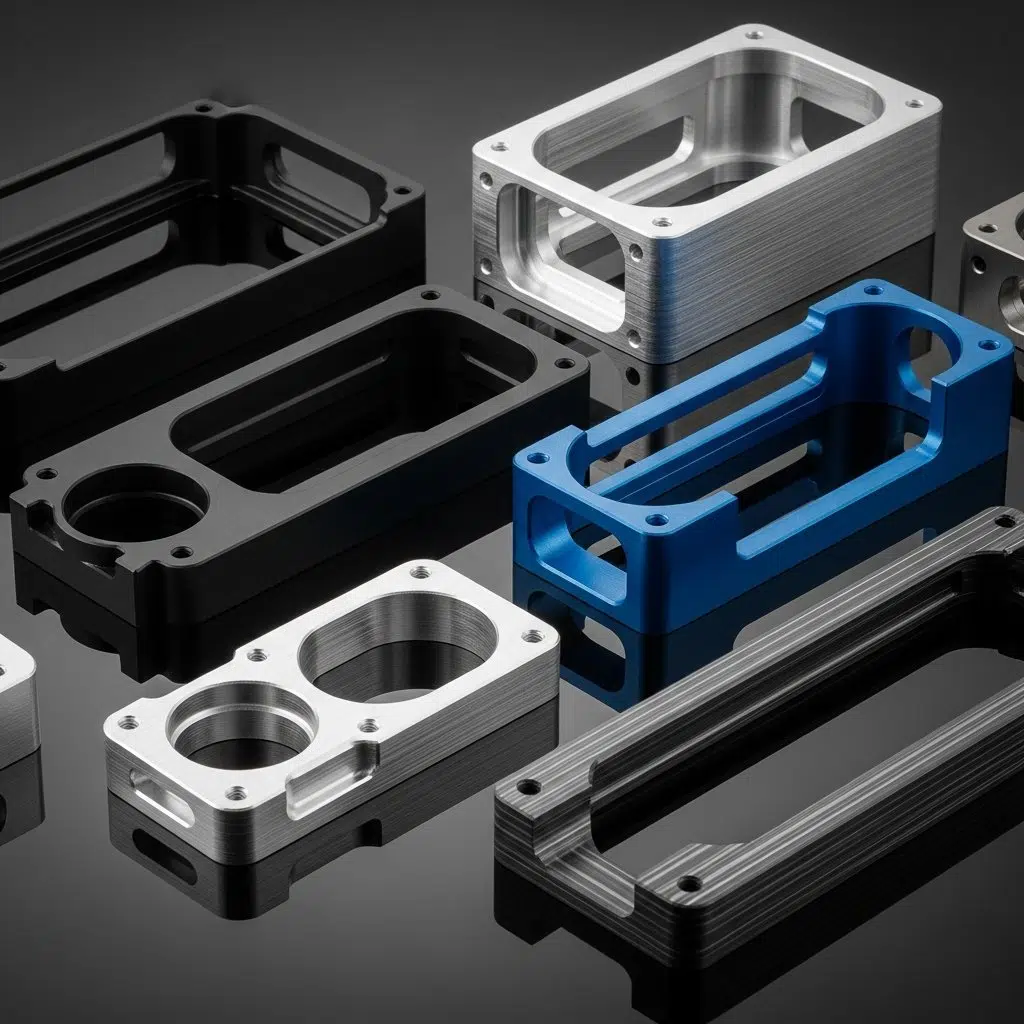
Aluminum alloys, particularly 7075, are a mainstay in CNC machining of drone parts due to their excellent balance of strength, weight, and cost-effectiveness. They are widely used for frames, brackets, and housings.
Their widespread availability and well-understood machining characteristics make them a practical choice for many custom drone part manufacturing applications.
Advantages for UAV CNC machining services
Aluminum alloys offer a high strength-to-weight ratio for their cost, making them ideal for reducing overall drone mass without significant expense. They also possess good machinability, allowing for complex geometries.
They are relatively easy to finish, with anodizing and other surface treatments enhancing corrosion resistance and aesthetics. This makes them versatile for many precision CNC drone components.
Challenges in precision CNC drone components
While strong, aluminum alloys are susceptible to fatigue failure under high cyclic loads if not properly designed. Their thermal expansion can also be a factor in assemblies with tight tolerances.
Corrosion resistance, while decent, often requires additional treatments in harsh environments. ly-machining provides design for manufacturability (DFM) guidance to mitigate these challenges.
Table: Aluminum Alloy (7075) Overview
| Property | Description |
|---|---|
| Strength-to-Weight | Excellent balance, high strength for its density. |
| Fatigue Resistance | Good, but can be a concern under high cyclic loads. |
| Thermal Stability | Moderate, sensitive to extreme temperature changes. |
| Corrosion Resist. | Good, enhanced by anodizing. |
Titanium alloys (e.g., Ti-6Al-4V) in CNC machining
Titanium alloys, particularly Ti-6Al-4V, represent the pinnacle for high-performance CNC machining of drone parts where extreme strength, low weight, and high durability are paramount. They are typically used for critical structural elements.
These alloys are a go-to choice for applications requiring superior performance in harsh environments, justifying their higher cost in demanding custom drone part manufacturing.
Superior strength for custom drone part manufacturing
Ti-6Al-4V boasts an exceptional strength-to-weight ratio, superior to most aluminum alloys, and excellent fatigue and fracture resistance. This translates to incredibly robust and reliable precision CNC drone components.
Its high corrosion resistance makes it suitable for marine or highly corrosive environments. ly-machining recommends titanium for mission-critical parts.
Machining considerations for high-end CNC parts
Titanium is notoriously difficult to machine due to its high strength and low thermal conductivity, which generates significant heat at the cutting edge. This requires specialized tooling and precise control during CNC manufacturing.
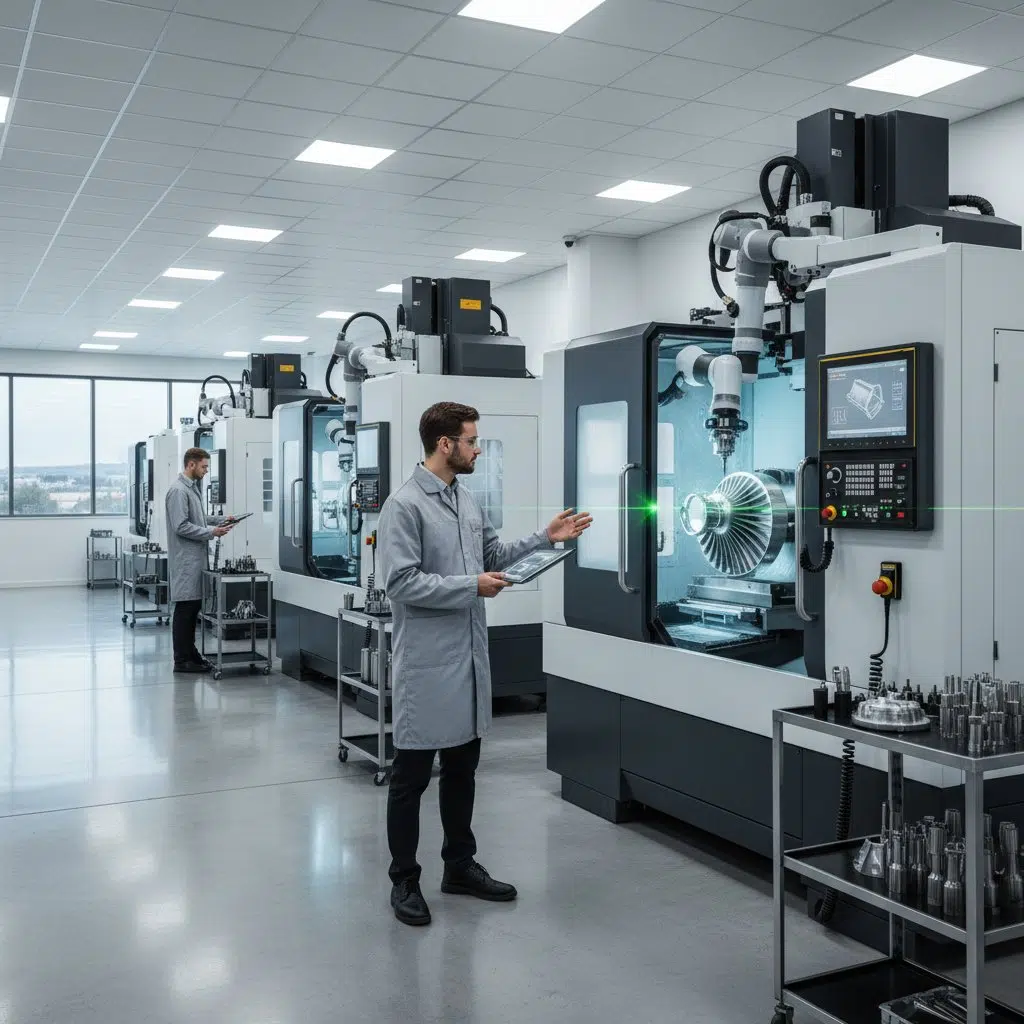
ly-machining utilizes advanced multi-axis CNC machines and optimized cutting strategies to efficiently produce high-quality titanium UAV CNC machining services components.
Table: Titanium Alloy (Ti-6Al-4V) Overview
| Property | Description |
|---|---|
| Strength-to-Weight | Exceptional, superior to aluminum. |
| Fatigue Resistance | Excellent, ideal for high-stress cyclic loads. |
| Thermal Stability | Very High, maintains properties at elevated temps. |
| Corrosion Resist. | Excellent, highly resistant to many environments. |
Carbon Fiber Composites (CNC integration) for drones
While not traditionally CNC machined in the same way metals are, carbon fiber composites are increasingly integrated with CNC machined components. These materials offer unparalleled strength-to-weight ratios.
They are ideal for large structural elements like fuselages and wings, often requiring CNC-machined inserts or mounting points for joining other precision CNC drone components.
Lightweight solutions for UAV CNC machining services
Carbon fiber is exceptionally light and incredibly strong, offering the highest strength-to-weight ratio among common drone materials. This makes it crucial for maximizing flight performance and payload capacity.
Custom drone part manufacturing often involves combining carbon fiber structures with metal CNC parts for optimum design.
Specific CNC challenges for composite drone parts
CNC machining of carbon fiber requires specialized techniques and tooling to prevent delamination and achieve clean cuts. Dust management is also a critical consideration due to abrasive fibers.
ly-machining has developed specific protocols for working with composite integration, ensuring precise interfaces between CNC machined metal parts and carbon fiber structures.
Table: Carbon Fiber Composite Overview
| Property | Description |
|---|---|
| Strength-to-Weight | Extremely high, leading for structural stiffness. |
| Fatigue Resistance | Very good, depending on fiber orientation. |
| Thermal Stability | Good, often resin-dependent. |
| Corrosion Resist. | Excellent, does not corrode. |
Engineering Plastics (e.g., PEEK) via CNC machining
High-performance engineering plastics like PEEK (Polyether Ether Ketone) are valuable for CNC machining of drone parts where electrical insulation, chemical resistance, or specific thermal properties are needed.
They offer unique advantages for non-structural or specialized precision CNC drone components, often replacing heavier metal parts where suitable.
When to use plastics for CNC machining of drone parts
PEEK is used for electrical insulators, bearings, sensor housings, and specific mounting brackets where vibration dampening or non-conductivity is desired. Its light weight also contributes to overall mass reduction.
It excels in harsh chemical environments and high temperatures where other plastics would degrade.
Benefits for specific precision CNC drone components
PEEK provides excellent chemical resistance, high temperature resistance, and good mechanical strength, albeit lower than metals. It is also dimensionally stable, making it suitable for tight-tolerance applications.
ly-machining leverages PEEK for its unique properties, offering bespoke plastic components tailored to specific drone requirements within custom drone part manufacturing.
Table: PEEK Plastic Overview
| Property | Description |
|---|---|
| Strength-to-Weight | Good for a plastic, but significantly lower than metals. |
| Fatigue Resistance | Excellent, good for dynamic loads within its range. |
| Thermal Stability | Very High for a plastic, excellent heat resistance. |
| Corrosion Resist. | Excellent, highly resistant to chemicals. |
Advanced Material Strategies for CNC Drones
Balancing cost and performance in custom drone manufacturing
The choice of material often involves a careful balance between performance requirements and budget constraints. High-performance materials like titanium come at a higher cost.
In ly-machining’s experience, early collaboration allows us to identify the most cost-effective materials that still meet all critical performance criteria for precision CNC drone components.
DFM principles for CNC machining of drone parts
Design for Manufacturability (DFM) is crucial. ly-machining works closely with clients to optimize designs for specific materials and CNC processes, reducing waste and improving efficiency.
This proactive approach minimizes redesigns and ensures that the chosen material can be machined effectively to achieve the required tolerances and finishes for UAV CNC machining services.
Leveraging simulation for precision CNC drone components
Advanced simulation tools, such as Finite Element Analysis (FEA), are invaluable for predicting how chosen materials will perform under real-world stresses. This validates material selection and design before physical production.
ly-machining utilizes these insights to refine material choices and structural designs, ensuring robust and reliable CNC machining of drone parts.
Tailored material solutions for UAV CNC machining services
Every drone application is unique. ly-machining doesn’t offer one-size-fits-all solutions. Instead, we provide tailored material recommendations based on specific operational profiles, environmental factors, and performance goals.
This bespoke approach ensures that your custom drone part manufacturing benefits from the most appropriate and optimized material choices available.
Your Partner in Precision Drone CNC Parts
Our deep technical expertise in CNC machining for UAVs
ly-machining brings years of hands-on experience and profound technical knowledge to every project. Our engineers possess a deep understanding of material science, CNC processes, and aerospace applications.
This expertise ensures that your CNC machining of drone parts benefits from optimal material selection and manufacturing execution, from prototype to full-scale production.
High-quality parts: A hallmark of our CNC machining
Quality is not just a goal at ly-machining; it is an ingrained principle. We adhere to stringent quality control standards, including ISO and AS9100 principles, throughout our CNC manufacturing process.
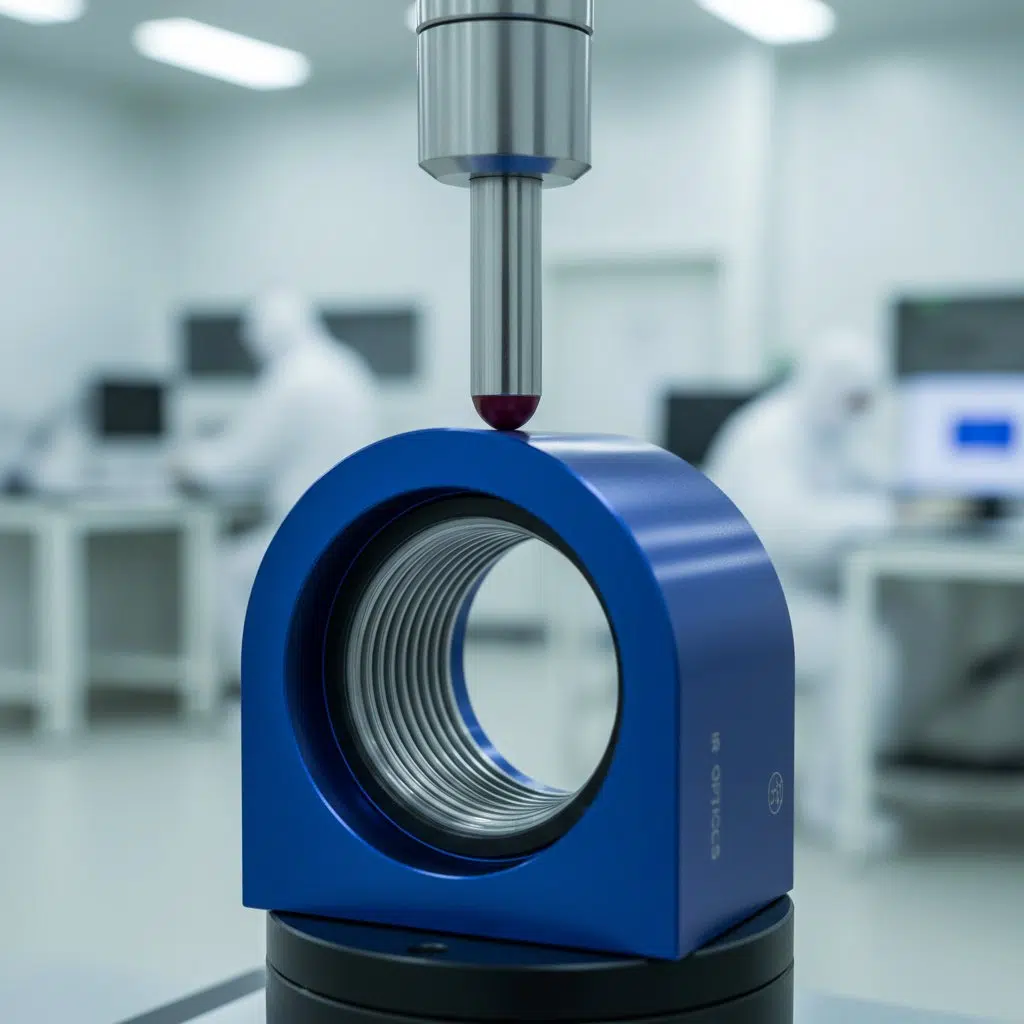
Every precision CNC drone component undergoes rigorous inspection to guarantee it meets the highest standards of dimensional accuracy, surface finish, and material integrity.
Transparent pricing for custom drone part manufacturing
ly-machining believes in clear, honest communication. Our pricing for custom drone part manufacturing is transparent, with detailed breakdowns of material costs, machining time, and finishing processes.
We aim to build long-term relationships based on trust and mutual benefit, providing predictable and fair costs for all UAV CNC machining services.
As a source manufacturer for CNC machining of drone parts
As a dedicated source manufacturer, ly-machining manages the entire production cycle in-house, from material sourcing to final inspection. This grants us unparalleled control over quality, lead times, and costs.
This direct control ensures consistency and reliability, making ly-machining a trusted partner for your precision CNC drone components.
Elevate Your Drone with Expert CNC Analysis
Ready for superior custom drone part manufacturing?
The performance of your drone hinges on the integrity and optimization of its components. Partnering with a specialist in CNC machining of drone parts ensures you leverage the best materials and manufacturing practices.
ly-machining is committed to helping you achieve unparalleled performance and reliability.
Contact us for UAV CNC machining services today
Don’t compromise your drone’s potential. Partner with a trusted source manufacturer who delivers high-quality, precision CNC drone components backed by deep technical expertise and transparent pricing.
Contact our engineering team today for a complimentary material consultation and a custom quote that elevates your UAV’s performance.
What materials are best for drone frames?
The best materials for drone frames often depend on the drone’s specific application and budget. Aluminum alloys like 7075 offer a great balance of strength, weight, and cost.
For high-performance or critical applications, titanium alloys (e.g., Ti-6Al-4V) or carbon fiber composites provide superior strength-to-weight ratios and durability. Engineering plastics like PEEK can be used for specialized non-structural components.
How does ly-machining ensure part quality?
ly-machining ensures part quality through stringent adherence to ISO and AS9100 principles, covering everything from certified material sourcing to final inspection. Our in-house manufacturing process provides complete control.
We utilize advanced multi-axis CNC machines and employ rigorous quality control checks at every stage. This guarantees that all precision CNC drone components meet exact specifications and high standards.
Why is DFM critical for drone components?
Design for Manufacturability (DFM) is critical for drone components because it optimizes the design for efficient and cost-effective CNC machining. It prevents potential manufacturing issues before they arise.
By considering material properties, machining processes, and assembly needs early, DFM ensures that custom drone part manufacturing results in robust, high-performing components with minimized waste and lead times.
 English
 German
 Turkish
 Spanish
 French