


Drone Gimbals: Eliminating Chatter for Precision
Quickly eliminating chatter marks in `custom aluminum CNC parts` for drone gimbals is paramount. ly-machining, as a leading `aluminum CNC machining manufacturer`, employs advanced `precision aluminum machining services` and stringent quality control, guaranteeing vibration-free components essential for superior aerial imaging.
The quest for pristine aerial photography and stable drone operation hinges on the unassuming precision of its gimbal components. Is your drone’s footage plagued by subtle vibrations or inconsistent quality, often traced back to microscopic imperfections? Such issues can severely compromise optical performance.
Leading `aluminum CNC machining manufacturers` understand that the key lies in overcoming the persistent challenge of ‘chatter marks. These minuscule surface flaws, while seemingly minor, can have a profound impact on the dynamic stability of critical `custom aluminum CNC parts`. This article will delve into these challenges, detailing how ly-machining, through its `precision aluminum machining services`, ensures unmatched stability and image fidelity.

The Hidden Impact of Chatter Marks on Drone Gimbals
Why Microscopic Flaws Compromise Aerial Stability
Chatter marks are more than just cosmetic defects; they represent microscopic imperfections on a machined surface caused by dynamic instability during the `CNC machining` process. These surface irregularities, even at a micron level, create uneven contact points and alter the component’s inherent vibrational characteristics.
For drone gimbal components, which require exceptional balance and smooth articulation, such flaws are catastrophic. They introduce unwanted resonant frequencies, amplify existing vibrations, and ultimately lead to unstable camera platforms. This directly degrades image quality, resulting in blurry footage or ‘jello’ effects.
Visualizing the Problem: Chatter Marks on Custom Aluminum CNC Parts
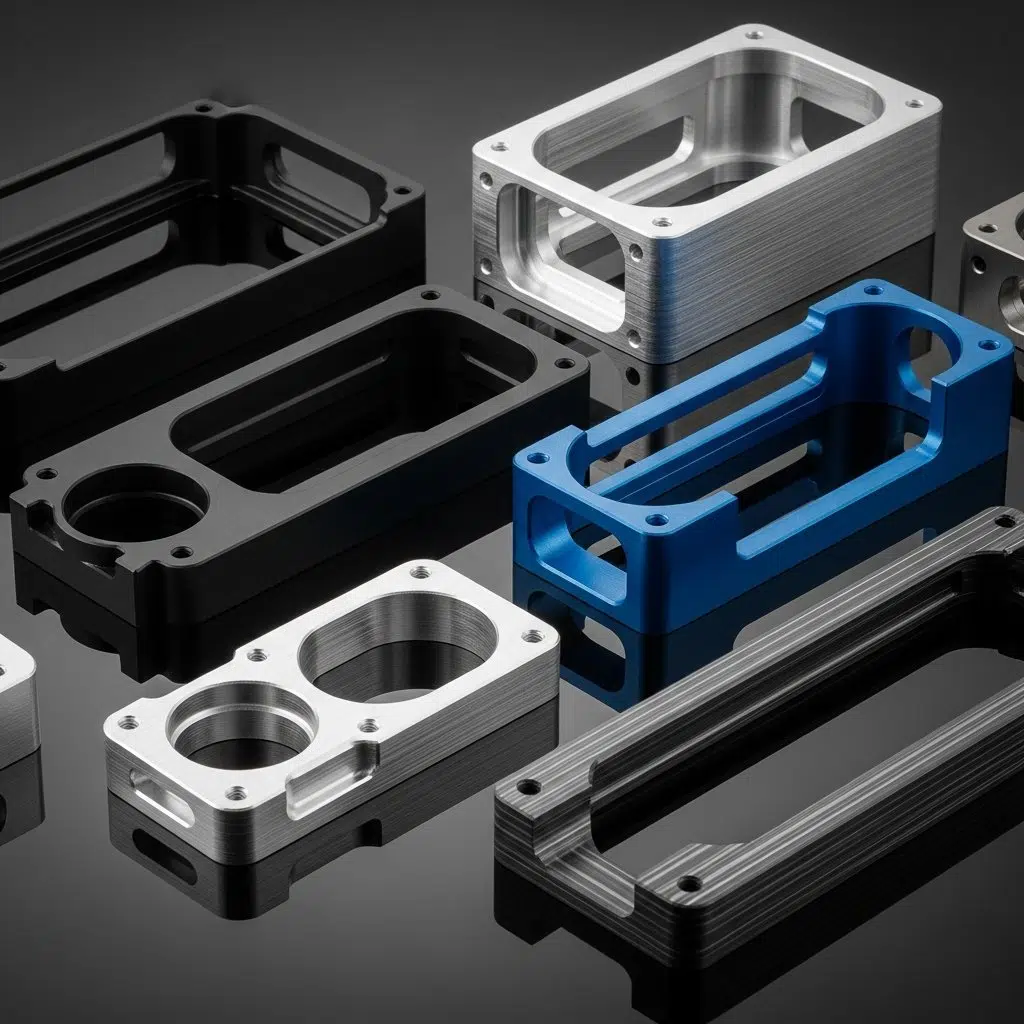
The impact of chatter on `custom aluminum CNC parts` designed for gimbals is quantifiable and visible. A seemingly smooth surface under normal inspection might reveal a distinct pattern of waves or striations when magnified. These patterns are the tell-tale signs of chatter.
When integrated into a gimbal, these imperfections prevent components from maintaining the precise kinematic relationships required for stable movement. The resulting micro-vibrations cascade through the system, affecting sensors and optics, and diminishing the overall performance of the aerial platform.

Unpacking Root Causes: Vibration in Aluminum CNC Machining
Machine Dynamics and Spindle Precision in CNC Machining
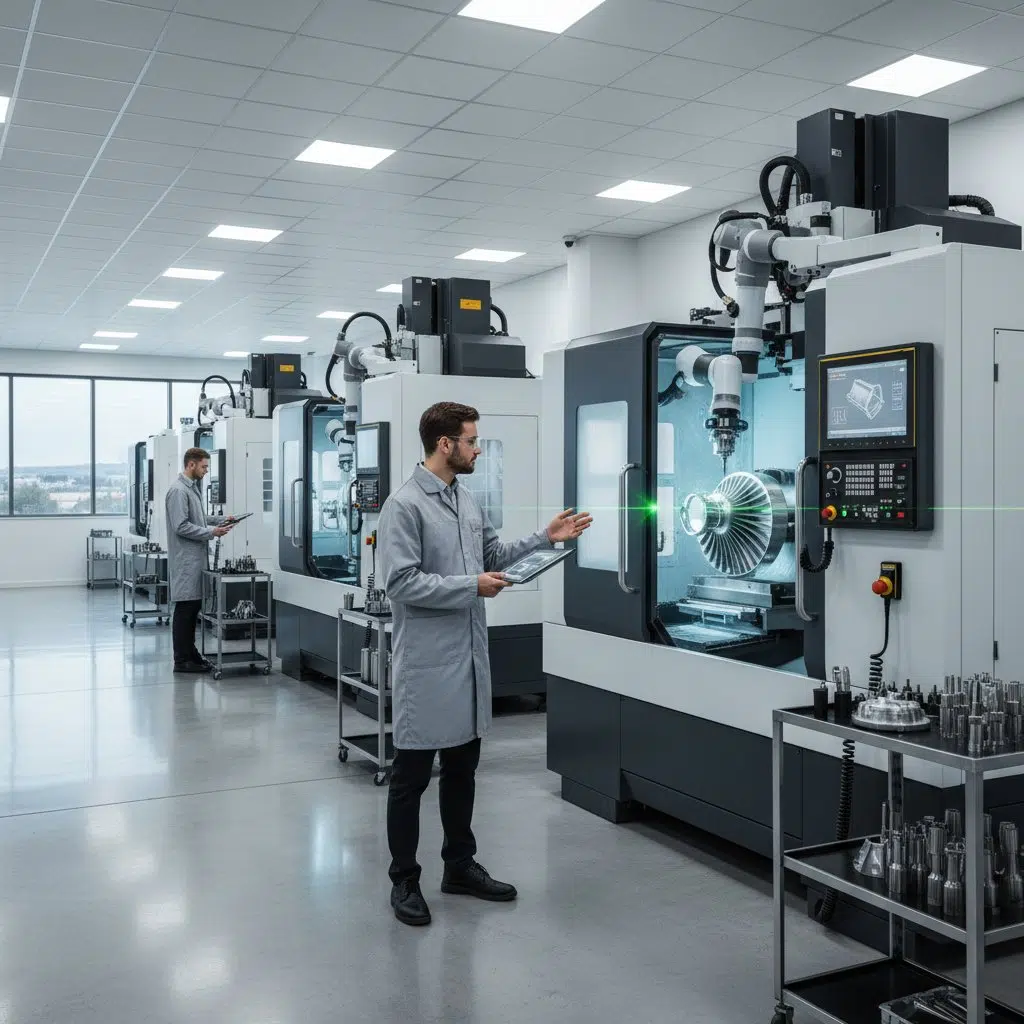
Vibration, the primary cause of chatter, originates from multiple sources within an `aluminum CNC machine shop`. A significant factor is the machine’s inherent dynamic stiffness and the precision of its spindle. Older machines or those with worn bearings can introduce unwanted harmonics and runout.
The interaction between the cutting tool, workpiece, and machine structure forms a complex dynamic system. If the cutting frequency aligns with a natural frequency of this system, resonance occurs, leading to violent oscillations and chatter marks. ly-machining meticulously calibrates its advanced `CNC machining` centers to mitigate these dynamics.
Tooling, Fixturing, and Material Selection for Precision Aluminum Machining Services
Suboptimal tooling, inadequate fixturing, and improper material selection are frequent culprits. A worn or incorrect tool geometry can induce excessive cutting forces and vibration. Similarly, a poorly designed fixture lacking rigidity allows the workpiece to flex under cutting loads.
Even the specific grade of aluminum chosen can influence machinability and vibration tendencies. In ly-machining’s experience, selecting the right alloy for `custom aluminum CNC parts` is as critical as the machining process itself. Certain aluminum alloys, while strong, may be more prone to chip adhesion or built-up edge, contributing to surface finish issues.

Environmental Factors Affecting Aluminum CNC Machine Shop Output
Beyond the machine and its setup, external environmental factors can subtly impact the output of an `aluminum CNC machine shop`. Temperature fluctuations, ground vibrations from nearby heavy machinery, or even insufficient cooling lubrication can contribute to instability. These elements can affect tool life, material properties, and machine calibration over time.
While often overlooked, maintaining a stable machining environment is part of ly-machining’s comprehensive quality strategy. Controlling these variables ensures consistent performance across all `precision aluminum machining services` provided.
Table 1: Common Causes of Chatter in Aluminum CNC Machining
| Category | Specific Cause | Impact on Part Quality |
|---|---|---|
| Machine Dynamics | Worn Spindle Bearings, Low Machine Stiffness | Inconsistent cutting, induced vibration, poor surface finish |
| Tooling | Incorrect Geometry, Worn Edges, Insufficient Rigidity | High cutting forces, poor chip evacuation, surface tearing |
| Fixturing | Insufficient Clamping, Workpiece Flex | Positional inaccuracies, increased vibration, feature distortion |
| Material | Wrong Alloy for Application, Internal Stresses | Difficulty achieving desired finish, material deformation |
| Process Parameters | Excessive Speeds/Feeds, Improper Depth of Cut | Overheating, tool wear, resonant frequency excitation |
Our Expertise: Eliminating Chatter for Superior Performance
Advanced Tool Path Strategies by Aluminum CNC Machining Manufacturers
At ly-machining, we leverage sophisticated CAM software and deep process knowledge to design tool paths that actively suppress chatter. This involves strategies like trochoidal milling, adaptive clearing, and precise ramp-in/ramp-out techniques. These approaches maintain a constant chip load, reducing sudden force variations that trigger vibration.
For `custom aluminum CNC parts` requiring ultra-fine finishes, ly-machining employs specific finishing passes with optimized step-overs and high spindle speeds. This minimizes tool engagement time and friction, resulting in pristine surfaces essential for high-performance gimbal components.

Proprietary Vibration Dampening for Custom Aluminum CNC Parts
ly-machining invests heavily in advanced machine tool technology featuring integrated vibration dampening systems. These active and passive dampeners absorb resonant energy, preventing it from propagating to the cutting zone. This is crucial for maintaining stability during aggressive material removal and delicate finishing operations.
Beyond machine-level solutions, ly-machining employs custom-designed fixtures. These fixtures are often designed with high-mass, rigid clamping mechanisms and sometimes include viscoelastic materials to further absorb micro-vibrations, ensuring the `custom aluminum CNC parts` remain stable throughout processing. This holistic approach ensures superior quality for `high-quality aluminum components`.
Integrated Metrology and Quality Control for Precision Aluminum Machining Services
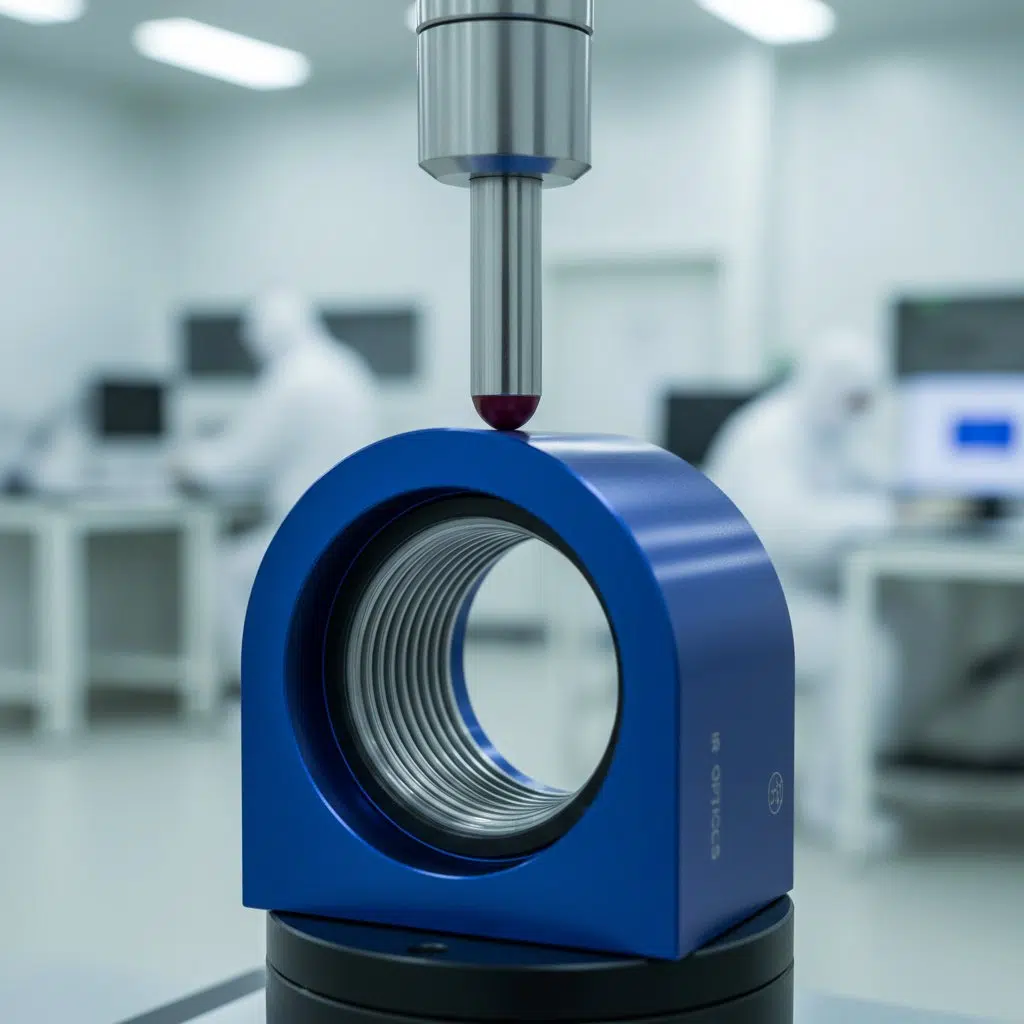
True quality in `precision aluminum machining services` is verified through rigorous inspection. ly-machining’s quality control process for `custom aluminum CNC parts` includes state-of-the-art metrology equipment. We utilize Coordinate Measuring Machines (CMMs) for dimensional accuracy, optical comparators for profile verification, and surface profilometers to quantify surface roughness (Ra values) with extreme precision.
Every batch of gimbal components undergoes strict AS9100 and ISO 9001 compliant checks. This ensures not only dimensional conformity but also the absence of microscopic surface defects like chatter, guaranteeing the reliability of our `aluminum CNC machine shop` output.
Table 2: Key Parameters for Chatter Elimination
| Parameter | ly-machining’s Approach | Benefit for Drone Gimbals |
|---|---|---|
| Spindle Speed (RPM) | Optimized via modal analysis, avoiding resonant frequencies | Smoother cuts, reduced vibration, extended tool life |
| Feed Rate (IPM) | Adjusted for constant chip load, matched to tool/material | Consistent surface finish, minimized chatter |
| Depth of Cut (DOC) | Controlled for dynamic stability, often lighter finishing passes | High precision, superior surface quality (low Ra) |
| Tool Engagement Angle | Maintained within optimal range for stability | Reduced cutting forces, improved part integrity |
| Coolant Strategy | High-pressure, targeted coolant for optimal chip evacuation | Prevents chip re-cutting, thermal stability, better finish |
Material Optimization: Beyond Standard CNC Machining Practices
Choosing the right aluminum alloy is fundamental to achieving chatter-free `custom aluminum CNC parts`. While 6061-T6 is common, ly-machining often recommends or works with specialized alloys like 7075-T6 for higher strength-to-weight ratios or specific aerospace grades. We consider factors such as machinability, inherent dampening properties, and thermal expansion coefficients.
ly-machining’s expertise extends to understanding how different heat treatments and material conditions impact machinability and final surface integrity. This allows us to guide clients towards the optimal material choice that complements our advanced `precision aluminum machining services`, ensuring robust and stable components for drone gimbals.

The Source Manufacturer Advantage: Quality & Expertise
Deep Technical Know-How in Advanced CNC Machining
As a `source manufacturer`, ly-machining brings unparalleled technical expertise to every project. Our engineering team possesses an in-depth understanding of material science, mechanical dynamics, and advanced `CNC machining` principles. This allows ly-machining to not just execute designs but to proactively identify and resolve potential manufacturing challenges at the DFM (Design for Manufacturability) stage.
ly-machining’s proactive approach ensures that every `custom aluminum CNC part` for drone gimbals is optimized for production efficiency and ultimate performance. We offer valuable insights that only a dedicated `aluminum CNC machining manufacturer` with years of hands-on experience can provide.
Transparent Processes and Pricing for Your Custom Aluminum CNC Parts
Transparency is a cornerstone of ly-machining’s service. ly-machining provides clear, detailed quotes without hidden costs, outlining the specific `precision aluminum machining services` involved. We believe that clients should fully understand the value they receive.
This commitment to clarity extends to our manufacturing processes. ly-machining openly communicates progress, challenges, and solutions, fostering trust and partnership with clients seeking `high-quality parts`. This is how ly-machining builds long-term relationships as a reliable `aluminum CNC machine shop`.

Case Study: Flawless Performance from Our Aluminum CNC Machine Shop
**Problem:** A leading drone manufacturer approached ly-machining with persistent issues of image jitter and reduced gimbal lifespan. Their existing supplier for `custom aluminum CNC parts` consistently delivered components exhibiting subtle chatter marks, leading to resonance when the gimbal motors operated at certain frequencies. This directly impacted their product’s market reputation and customer satisfaction.
**ly-machining’s Solution:** ly-machining’s engineers conducted a thorough analysis of the client’s gimbal design and existing components. We identified that the chatter was primarily due to inadequate fixture rigidity and a non-optimized tool path for the specific aluminum alloy. ly-machining re-engineered the fixturing using custom-designed clamps with enhanced dampening properties and developed a multi-stage `CNC machining` process. This involved roughing with specific high-feed tools and then precision finishing passes with fine-tuned parameters to eliminate any potential for vibration and achieve a sub-Ra 0.8 surface finish.
**Result:** The new `precision aluminum machining services` provided by ly-machining completely resolved the chatter issue. The client’s drone gimbals demonstrated significantly improved stability, with a measurable reduction in image jitter. This allowed them to launch a new, highly acclaimed drone model renowned for its superior aerial imaging capabilities. The lifespan of the gimbal components also increased by over 30%, validating ly-machining’s expertise as a trusted `aluminum CNC machining manufacturer`.

Partner with Leading Aluminum CNC Machining Manufacturers
Elevate Your Drone Components with Our Precision Aluminum Machining Services
In the demanding world of drone technology, the performance of every component is critical. ly-machining stands as a premier `aluminum CNC machining manufacturer`, dedicated to delivering `custom aluminum CNC parts` that exceed expectations. ly-machining’s commitment to eliminating chatter marks ensures your aerial platforms achieve unparalleled stability and optical clarity.
We combine cutting-edge technology with deep engineering acumen, offering `precision aluminum machining services` that are not just precise but truly transformative for your products. Trust ly-machining to be your partner in achieving drone excellence.

Get a Technical Consultation for Your Next Custom Aluminum CNC Parts Project
Ready to elevate your drone’s performance and eliminate costly gimbal component issues? As a `source manufacturer` specializing in `precision aluminum machining services`, ly-machining guarantees vibration-free, `high-quality parts`. Contact ly-machining’s `aluminum CNC machine shop` today for a transparent quote and a technical consultation to discuss your `custom aluminum CNC parts` project.

FAQ Section
What causes chatter marks?
Chatter marks arise from dynamic instability during `CNC machining`. This often results from factors like machine vibration, improper tooling, insufficient fixturing, or incorrect cutting parameters, creating microscopic surface irregularities on `custom aluminum CNC parts`.
These oscillations compromise the precision needed for `precision aluminum machining services`, especially in delicate components like drone gimbals. ly-machining addresses these root causes through a multi-faceted approach.
How does ly-machining prevent chatter?
ly-machining employs a combination of advanced strategies. This includes optimizing tool paths with sophisticated CAM software, utilizing proprietary vibration dampening techniques, and implementing rigid fixture designs in our `aluminum CNC machine shop`.
We also meticulously select materials and fine-tune `CNC machining` parameters. This comprehensive approach ensures the delivery of `high-quality parts` free from chatter.
Why is precision critical for drone gimbals?
Precision is paramount for drone gimbals because even minute surface imperfections, such as chatter marks, introduce micro-vibrations. These vibrations directly degrade aerial image quality, causing blurring or distortion, and can shorten the lifespan of the gimbal mechanisms.
ly-machining’s `precision aluminum machining services` ensure the necessary stability. This guarantees optimal optical performance and reliability for critical `custom aluminum CNC parts`.
 English
 German
 Turkish
 Spanish
 French