


Mastering PEEK CNC Machining: Deformation Prevention
Is PEEK deformation silently sabotaging your high-stakes projects and inflating your budget? You are not alone in facing this persistent challenge with advanced polymers. Many engineers struggle with the inherent complexities of Polyetheretherketone machining.
The costly rejections and project delays stemming from warped parts can be profoundly frustrating. This article unveils the precise technical strategies to prevent deformation, ensuring unparalleled precision for your critical CNC PEEK parts.
Unlock the secrets to mastering PEEK CNC machining and guarantee flawlessly precise parts every time. We will guide you through the root causes and proven prevention methods.

PEEK deformation prevention is achieved through a meticulous understanding of material science combined with optimized machining processes and stringent quality control.
PEEK CNC: Prevent Deformation
Setting Scene & Problem
Why PEEK Deformation Plagues Projects
PEEK (Polyetheretherketone) is highly valued for its exceptional strength, chemical resistance, and biocompatibility, making it indispensable in critical applications. However, its unique thermophysical properties present significant challenges during CNC machining processes. These challenges often lead to dimensional instability.
The material’s inherent characteristics, combined with suboptimal machining practices, frequently result in warping or cracking. This susceptibility to deformation complicates the production of high-precision CNC PEEK parts. Addressing these issues requires a deep technical understanding.
The Cost of CNC Machining Errors
Errors in PEEK CNC machining translate directly into substantial financial losses and project setbacks. High scrap rates increase material waste and production costs, directly impacting project profitability. Delayed timelines can also affect market entry and critical operational schedules.
Beyond financial implications, inconsistent part quality can lead to performance failures in end-use applications. Such failures severely damage reputation and necessitate expensive corrective actions. Preventing these errors is paramount for any demanding project.

Core Thesis & Content Preview
Your Solution to PEEK Part Challenges
Our factory provides a definitive solution to the pervasive challenges of PEEK deformation in CNC machining. We leverage extensive engineering expertise and state-of-the-art manufacturing processes. This ensures the production of highly stable and precise PEEK components.
We focus on meticulous control at every stage, from material selection to post-machining treatment. Our approach guarantees superior quality and reliability. Clients can depend on our capabilities for their most demanding Polyetheretherketone machining requirements.
What We’ll Cover: Causes, Fixes
This comprehensive guide delves into the fundamental causes of PEEK deformation, offering an engineer’s perspective on root issues. We will examine both intrinsic material properties and external machining factors that contribute to instability.
Crucially, we will detail proven, actionable strategies for PEEK deformation prevention. Our discussion covers advanced techniques from initial material preparation through final post-processing, providing a roadmap for achieving flawless CNC PEEK parts.
PEEK Deformation Causes
Material Science & Heat
PEEK Thermal Expansion: The Silent Foe
PEEK exhibits a relatively high coefficient of linear thermal expansion compared to metals, which makes it particularly sensitive to temperature fluctuations during machining. Frictional heat generated by tooling can cause localized expansion. This leads to internal stresses.
As the PEEK material cools unevenly, these thermal gradients relax inconsistently. This induces residual stresses that manifest as warping or dimensional inaccuracies. Understanding and managing this thermal behavior is critical for PEEK CNC machining.
| Material Type | Coefficient of Thermal Expansion (µm/m°C) |
|---|---|
| PEEK | 50 – 60 |
| Aluminum (6061) | 23.6 |
| Stainless Steel 304 | 17.3 |
| PTFE | 120 – 150 |
Internal Stress & Crystallinity Defined
PEEK, as a semi-crystalline thermoplastic, possesses a complex microstructure where both amorphous and crystalline regions coexist. The degree of crystallinity significantly influences its mechanical properties and its propensity for internal stress. Material processing during extrusion or molding can lock in residual stresses.
During machining, these locked-in stresses are relieved as material is removed, causing the part to distort. Controlling crystallinity and relieving these inherent stresses prior to machining are vital steps for effective PEEK deformation prevention.

Machining Factors & Design
Tooling & Clamping Impact
The choice of cutting tools and machining parameters profoundly affects PEEK’s thermal and mechanical response. Dull tools generate excessive heat and induce compressive stresses. Incorrect tool geometries can lead to poor chip evacuation and further heat buildup.
Similarly, improper clamping pressure can deform the PEEK workpiece, especially for thin-walled or complex geometries. Over-clamping or uneven clamping can create localized stress points, which are then exacerbated by cutting forces during Polyetheretherketone machining.
Part Geometry & CNC Process
Complex part geometries with varying wall thicknesses, sharp corners, or deep pockets inherently pose greater challenges for PEEK CNC machining. Such features can concentrate stresses and are more susceptible to thermal gradients and differential shrinkage. These contribute to part deformation.
The entire CNC process, including spindle speed, feed rate, depth of cut, and cooling strategies, must be meticulously optimized for PEEK. Deviations from optimal parameters can quickly compromise dimensional stability. This highlights the importance of precise process control.

PEEK Deformation Prevention
Pre-Machining Preparation
Stress Relief & Material Annealing
One of the most effective strategies for PEEK deformation prevention is pre-machining stress relief through controlled annealing. This process involves heating the PEEK material to a specific temperature below its melting point, holding it for a period, and then slowly cooling it. Annealing allows the polymer chains to relax and residual stresses to dissipate.
Proper annealing significantly stabilizes the material, making it less prone to warping during subsequent CNC PEEK machining. This proactive step reduces the risk of dimensional inaccuracies. It is a critical foundation for high-precision PEEK components.

Design for PEEK Machinability
Designing parts with PEEK machinability in mind can drastically reduce the likelihood of deformation. Engineers should aim for uniform wall thicknesses and avoid abrupt transitions or sharp internal corners where stress concentrations can occur. Incorporating generous radii helps distribute stress.
Consideration of tool access and clamping points during design also aids in optimizing the machining process. Early collaboration between design and manufacturing engineers is key. This ensures a design that is robust against the challenges of Polyetheretherketone machining.
| Design Feature | Recommendation for PEEK Machining |
|---|---|
| Wall Thickness | Uniform; minimize variations |
| Internal Corners | Maximize radii to reduce stress concentration |
| Support Features | Include ribs or webs for added stiffness |
| Clamping Points | Design flat, accessible surfaces for secure clamping |
Optimized CNC Techniques
Advanced Tooling & Parameters
For successful PEEK CNC machining, employing sharp, specialized cutting tools with optimal geometries is crucial. Positive rake angles, large relief angles, and polished flutes aid in efficient chip evacuation and minimize heat generation. Carbide tools with specific coatings are often preferred.
Adjusting spindle speeds, feed rates, and depth of cut is paramount. Slower speeds, higher feed rates (for larger chip loads), and shallower passes per cut are typically recommended to manage heat and reduce stress. This minimizes material distortion.

Smart Clamping & Cooling Methods
Effective clamping is vital to secure the PEEK workpiece without inducing undue stress. Custom fixtures designed to distribute clamping forces evenly across a larger surface area prevent localized deformation. Vacuum clamping or soft jaws are often utilized for delicate parts.
Controlled cooling strategies, such as flood coolant or mist application, are essential to dissipate heat from the cutting zone. This minimizes thermal expansion and maintains dimensional stability. A balanced approach ensures optimal Polyetheretherketone machining conditions.
Post-Machining Processes
After initial machining, further stress relief or annealing may be necessary, especially for highly precise or complex CNC PEEK parts. This secondary annealing helps to relax any residual stresses introduced during the cutting process. It ensures long-term dimensional stability.
Careful deburring and surface finishing are also important. Aggressive post-machining operations can reintroduce stresses or damage the part surface. A gentle approach maintains the integrity of the PEEK component.
Solve PEEK Challenges
Expert Troubleshooting Tips
Common PEEK Problems & Fixes
If PEEK deformation occurs, systematic troubleshooting is essential. Analyze the location and pattern of deformation: is it warping, cracking, or dimensional inaccuracy? This helps identify whether the root cause is thermal, mechanical, or material-related. Check tool wear, coolant flow, clamping pressure, and original material properties.
For minor warping, a controlled post-machining annealing process can sometimes recover dimensional accuracy. For persistent issues, a full review of the PEEK CNC machining parameters, material certificates, and design for manufacturability is recommended.

When to Consult an Expert
While internal expertise is valuable, complex or persistent PEEK deformation issues often benefit from external specialization. Consulting a factory with deep, proven expertise in Polyetheretherketone machining can provide invaluable insights and solutions. An expert partner can analyze your specific design and process.
Our team possesses the specialized knowledge, advanced equipment, and extensive experience to diagnose and resolve even the most challenging PEEK CNC machining problems. We offer tailored advice and comprehensive solutions.
Our Advanced PEEK Expertise
High-Quality Parts, Transparent Pricing
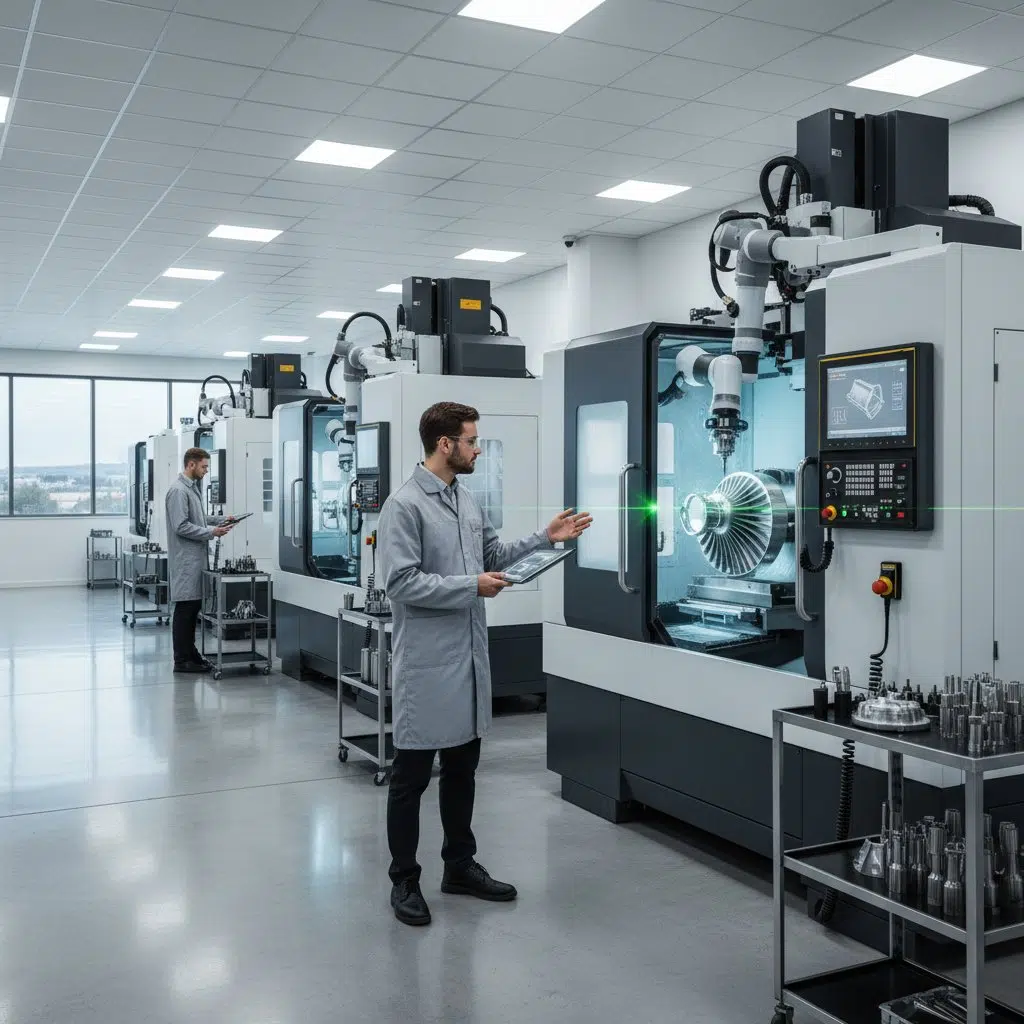
Our commitment to PEEK deformation prevention is embedded in our factory’s operational philosophy. We utilize advanced CNC machinery and implement rigorous quality control protocols at every stage of production. This ensures the delivery of consistently high-quality CNC PEEK parts.
We pride ourselves on transparent pricing structures, offering competitive rates without compromising on precision or reliability. Clients benefit from clear cost breakdowns and predictable outcomes for their critical projects.
Custom PEEK CNC Solutions
We specialize in developing custom PEEK CNC machining solutions tailored to the unique requirements of each client’s application. Our engineers collaborate closely to optimize designs, select appropriate PEEK grades, and fine-tune machining parameters. This bespoke approach guarantees optimal performance and longevity.
From prototyping to high-volume production, our capabilities extend across diverse industries. We deliver complex, precise PEEK components that meet the most stringent specifications. Our expertise in Polyetheretherketone machining ensures successful project outcomes.

Flawless PEEK Parts
Key Takeaways Reinforced
Recap: PEEK Deformation Solved
Mastering PEEK CNC machining requires a holistic approach that integrates material science, meticulous pre-machining preparation, optimized cutting techniques, and precise post-processing. Addressing thermal expansion, internal stresses, and appropriate tooling is paramount.
By implementing these proven strategies, PEEK deformation can be effectively mitigated. This ensures the production of dimensionally stable and high-performance CNC PEEK parts. Our expertise provides a reliable pathway to success.
The Value of Expert PEEK Machining
Partnering with an expert in Polyetheretherketone machining offers significant advantages, including reduced scrap rates, faster project timelines, and consistent part quality. It minimizes the risks associated with complex material processing. Our factory delivers confidence and reliability.
Leveraging specialized knowledge ensures that even the most challenging designs are executed with precision. This leads to superior product performance and substantial long-term cost savings.
Next Steps & Partnership
Consult Our PEEK CNC Specialists
Ready to elevate your PEEK part quality and eliminate costly deformation? Contact our expert engineering team today for a personalized consultation on your specific PEEK CNC machining project and experience our transparent pricing firsthand. Let’s build your success together.
Case Study
Problem: A client in the aerospace industry faced persistent warping and dimensional instability in critical PEEK sensor housings. Their previous supplier struggled with tight tolerances and the delicate geometry, leading to a 30% rejection rate. This caused significant project delays and cost overruns, jeopardizing their satellite component launch schedule.
Our Solution: Our engineers meticulously analyzed the PEEK material’s thermal history and the part’s complex geometry. We implemented a multi-stage stress relief annealing process prior to machining. Additionally, we designed custom fixtures for even clamping, optimized tool geometries for minimal heat generation, and fine-tuned our PEEK CNC machining parameters with controlled cooling.
Result: The application of our comprehensive PEEK deformation prevention strategy resulted in a near-zero rejection rate for the sensor housings. The client achieved the required tight tolerances and superior surface finish, allowing them to meet their stringent project deadlines and significantly reduce overall production costs. Their satellite component was launched on schedule.
Call to Action
Invite readers to get a free quote or technical consultation.
FAQ Section
Why does PEEK deform easily?
PEEK deforms due to its high coefficient of thermal expansion and inherent internal stresses. These stresses are often locked in during manufacturing processes and released during material removal in CNC machining, especially when heat is generated. Inconsistent cooling also contributes significantly.
The material’s semi-crystalline nature means its dimensional stability is highly sensitive to temperature changes. Without proper controls, these factors lead to warping and inaccuracy. This is a common challenge in Polyetheretherketone machining.
How do you prevent PEEK warping?
Preventing PEEK warping involves several key strategies implemented throughout the manufacturing cycle. Pre-machining stress relief annealing is crucial to stabilize the material before any cuts are made. Optimized CNC PEEK machining parameters, including specific tool geometries, feed rates, and cooling methods, are also essential.
Proper clamping techniques that evenly distribute pressure across the part prevent localized stress buildup. Additionally, post-machining stress relief can further enhance dimensional stability, ensuring the final CNC PEEK parts meet tight tolerances.
What are optimal PEEK machining parameters?
Optimal PEEK machining parameters vary based on part geometry, material grade, and desired finish. Generally, using sharp, high-positive rake angle tools with good chip evacuation is recommended. Slower spindle speeds with higher feed rates (resulting in larger chip loads) help minimize heat generation.
Shallow depths of cut reduce stress on the material. Constant, effective cooling via flood coolant or mist is also vital to manage thermal effects. These combined parameters are critical for successful PEEK CNC machining and deformation prevention.
 English
 German
 Turkish
 Spanish
 French