

Precision CNC & Surface Treatment for Drone Parts
Unlock peak drone performance with ly-machining’s precision CNC machining of drone parts and advanced surface treatments, ensuring superior strength-to-weight ratios and environmental durability for all custom UAV components.
Compelling Introduction:
Is your drone’s full potential being grounded by components that can’t withstand the mission? From sub-zero altitudes to corrosive coastal operations, drone components face extreme demands. The integrity of every flight hinges on the quality and resilience of its parts.
This article delves into the critical synergy of advanced CNC machining and specialized surface treatments, explaining how they unlock unparalleled durability, performance, and operational reliability for custom UAV parts manufacturing. Discover how ly-machining leverages deep expertise to engineer components that not only survive but thrive.

Exploring Drone Part Challenges & Opportunities
Precision drone components: Meeting extreme demands
Precision drone components are subject to an array of environmental and operational stresses. These include rapid temperature fluctuations, high-frequency vibrations, significant G-forces during maneuvers, and exposure to corrosive elements like salt spray or harsh chemicals.
Each component must maintain its structural integrity and dimensional stability under these rigorous conditions. Ensuring performance demands not just high precision in manufacturing but also robust material science.
In ly-machining’s experience, designing for these extremes from the outset is paramount. We focus on predictive performance analysis and robust material selection to avoid costly field failures.
Custom UAV parts manufacturing challenges
Custom UAV parts manufacturing presents unique challenges, often requiring intricate geometries and ultra-lightweight designs. The need for reduced weight without compromising strength pushes the boundaries of traditional machining.
Designers also face the dilemma of balancing performance with cost-effectiveness, especially for niche or rapidly evolving drone applications. Prototyping cycles need to be fast and iterative.
A common issue ly-machining sees is the struggle to source suppliers who can handle both the complexity of precision CNC machining and the specialized surface treatments under one roof. This often leads to fragmented supply chains and quality inconsistencies.
Environmental impacts on CNC machining of drone parts
Environmental factors critically influence the choice of materials and surface treatments for CNC machining of drone parts. For instance, drones operating in marine environments require exceptional corrosion resistance.
Those exposed to extreme UV radiation or abrasive sands need specific coatings to prevent degradation and wear. The operational altitude also affects thermal management requirements.
ly-machining conducts thorough environmental assessments with clients to recommend the most appropriate material-treatment combinations, ensuring parts are fit for purpose. This foresight minimizes future maintenance and replacement costs.

Precision CNC for Drone Parts: The Core
CNC machining of drone parts for optimal performance
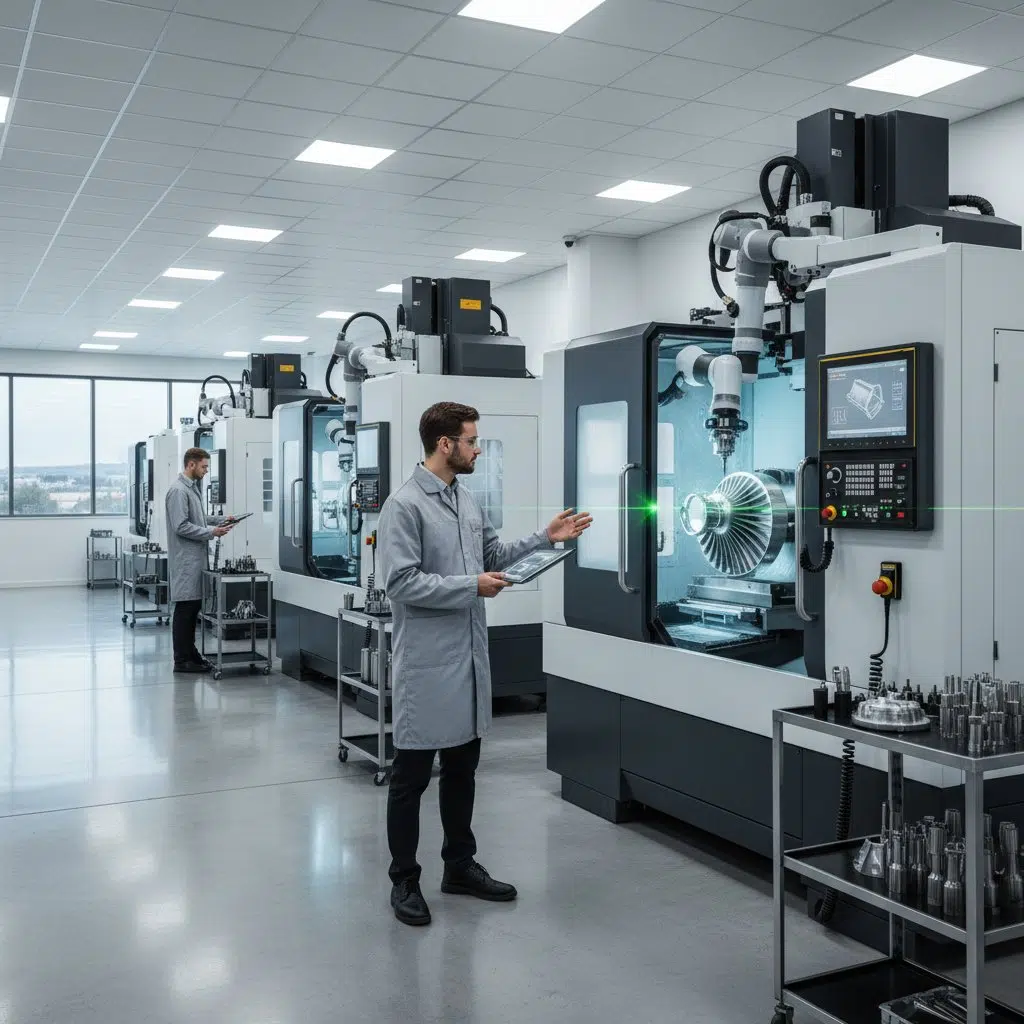
CNC machining of drone parts is fundamental to achieving the precise geometries and tight tolerances required for optimal aerodynamic performance and structural integrity. Our advanced multi-axis CNC machines allow for the creation of complex shapes.
This includes components for propulsion systems, airframes, and payload enclosures. Accuracy directly translates to reduced drag, improved balance, and enhanced flight efficiency for the drone.
ly-machining utilizes state-of-the-art 3-axis, 4-axis, and 5-axis CNC milling and turning centers. This ensures every curve, slot, and bore meets exact specifications, critical for high-performance UAVs.
Achieving tight tolerances in precision drone components
Achieving tight tolerances in precision drone components is non-negotiable for flight safety and system integration. Even minor deviations can lead to imbalance, vibration, or failure to fit correctly.
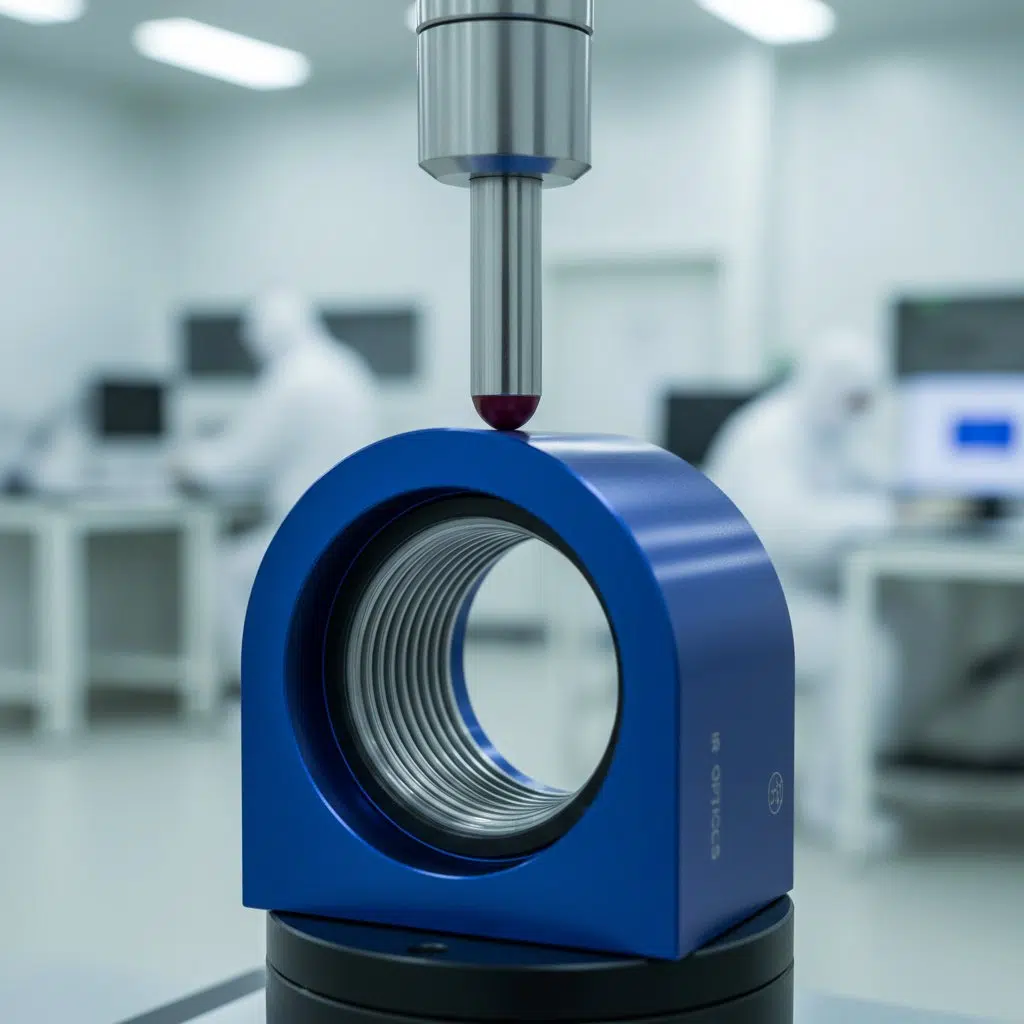
ly-machining employs advanced metrology equipment, including CMMs and optical inspection systems, to verify every critical dimension. Our stringent quality control processes adhere to ISO9001 and IATF1649 standards.
This guarantees that components like motor mounts, propeller hubs, and sensor housings precisely meet the stringent demands of aerospace applications. Our expertise extends to microns-level accuracy.
Material selection for lightweight drone parts CNC
Material selection for lightweight drone parts CNC is a balancing act between strength, weight, and cost. Aerospace-grade aluminum alloys (e.g., 6061, 7075), titanium, and specific stainless steels are common choices.
Aluminum offers an excellent strength-to-weight ratio and good machinability. Titanium provides superior strength and corrosion resistance but is harder to machine.
ly-machining specializes in processing these advanced materials. We provide expert Design for Manufacturability (DFM) reports to optimize material choice and part geometry, ensuring maximum performance.
Advanced CNC machining techniques for complex geometries
Advanced CNC machining techniques are essential for realizing the complex geometries often found in modern drone designs. These include thin-wall structures, internal channels, and intricate lattice designs.
5-axis CNC machining is particularly crucial here, enabling the simultaneous movement of cutting tools along multiple axes. This reduces setups, improves accuracy, and allows for highly complex shapes.
In ly-machining’s facilities, our extensive fleet of over 80 machines, including many 5-axis centers, routinely tackles these challenging designs. This capability is key to producing cutting-edge custom UAV parts.

Surface Treatment: Elevating Drone Parts
Enhancing durability of precision drone components
Surface treatment is critical for enhancing the durability of precision drone components far beyond what raw machined material can offer. It creates a protective barrier against environmental degradation.
This can significantly extend the operational lifespan of the components, reducing maintenance costs and improving overall system reliability. Durability ensures drones can perform consistently.
ly-machining integrates tailored surface treatments into our one-stop service, considering the specific operational environment and expected lifespan for each drone part.
Corrosion resistance for custom UAV parts manufacturing
Corrosion resistance is a vital consideration for custom UAV parts manufacturing, especially for drones operating near saltwater, in humid climates, or with exposure to chemicals. Untreated metal surfaces are susceptible to oxidation.
Anodizing, chemical conversion coatings (chromate or non-chromate), and specialized painting are common methods to protect against corrosion. These treatments chemically alter or cover the surface.
In ly-machining’s experience, selecting the right corrosion protection is a dialogue with the client. It balances the level of protection needed with the part’s aesthetic, electrical, and thermal requirements.
Fatigue life extension in CNC machining of drone parts
Fatigue life extension is a critical benefit of certain surface treatments for CNC machining of drone parts. High-cycle fatigue, caused by repetitive stress and vibration, is a common failure mode in aerospace.
Treatments like shot peening or various coatings can introduce compressive stresses into the surface. This inhibits crack initiation and propagation, thereby extending the part’s fatigue life.
ly-machining understands the importance of these advanced techniques. We advise on treatments that enhance the structural integrity of components, ensuring they withstand repeated operational stresses without premature failure.
Wear resistance for Lightweight drone parts CNC applications
Wear resistance is essential for lightweight drone parts CNC applications involving moving components or those exposed to abrasive environments. Propeller hubs, gear components, or landing gear elements are prime examples.
Hard anodizing, ceramic coatings, or specific PVD (Physical Vapor Deposition) treatments can dramatically increase surface hardness and abrasion resistance. This prevents material loss and maintains dimensional accuracy.
ly-machining helps clients select treatments that best protect critical surfaces. This ensures the longevity and smooth operation of dynamic drone assemblies, preventing wear-related malfunctions.

Surface Treatment: Selection & Application
Anodizing options for lightweight drone parts CNC
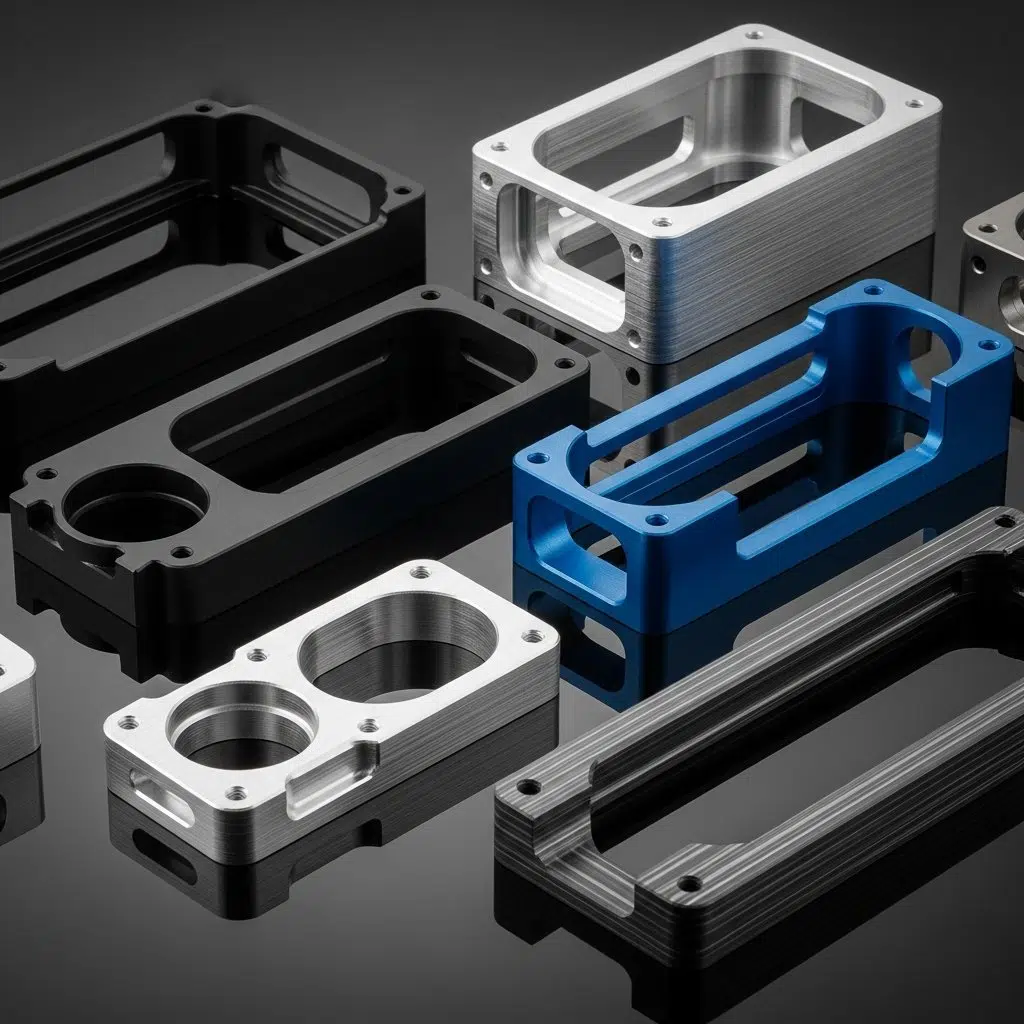
Anodizing is a popular and versatile surface treatment for aluminum lightweight drone parts CNC. It forms a durable, corrosion-resistant oxide layer, which can also be dyed for aesthetic purposes.
Type II (Sulfuric Acid Anodize) offers good corrosion and abrasion resistance, often used for general protective and decorative finishes. Type III (Hardcoat Anodize) provides superior hardness and wear resistance.
ly-machining offers various anodizing options, precisely controlled for thickness and finish. This ensures optimal protection and performance while maintaining the critical strength-to-weight ratio of the part.
Chemical conversion for enhanced precision drone components
Chemical conversion coatings, such as chromate conversion (Alodine) or non-chromate alternatives, are applied to aluminum precision drone components. They offer excellent corrosion resistance and electrical conductivity.
These coatings are typically thin and do not significantly alter part dimensions, making them suitable for tight-tolerance components. They also serve as an excellent primer for subsequent painting or bonding.
ly-machining applies these conversion coatings with precision, ensuring uniform coverage and optimal adherence to industry standards. This provides a robust foundation for further processing or direct use.

Specialized coatings in CNC machining of drone parts
Specialized coatings in CNC machining of drone parts go beyond conventional treatments, offering tailored solutions for unique operational challenges. These include PVD coatings, thermal barrier coatings, or low-friction options.
PVD coatings like TiN or DLC provide extreme hardness and wear resistance, ideal for highly stressed moving parts. Thermal barrier coatings protect components from intense heat generated by engines or electronics.
ly-machining collaborates with specialized partners for these advanced applications, ensuring a comprehensive one-stop service. Our DFM process often includes recommendations for these cutting-edge solutions.
Factors influencing Custom UAV parts manufacturing
Several factors influence the choice of surface treatment for Custom UAV parts manufacturing. These include the base material, the operating environment, required lifespan, aesthetic considerations, and cost.
For example, a high-altitude surveillance drone might prioritize UV and thermal resistance, while a maritime drone would need maximum saltwater corrosion protection. Weight is always a key factor.
ly-machining’s technical team provides expert guidance. We carefully assess each project’s unique requirements to recommend the most effective and cost-efficient surface treatment solution.
Here is a comparison of common surface treatments:
| Surface Treatment | Primary Benefit | Key Application for Drones | Material Compatibility |
|---|---|---|---|
| Anodizing (Type II) | Corrosion, Aesthetics | General Protection, Frames | Aluminum |
| Anodizing (Type III) | Hardness, Wear | Motor Mounts, Bearings | Aluminum |
| Chromate Conversion | Corrosion, Conductivity | Electrical Contacts, Primers | Aluminum |
| PVD Coatings | Extreme Hardness, Wear | High-Stress Moving Parts | Metals, Alloys |
Here is a comparison of material properties for drone components:
| Material Type | Key Advantage | Typical Drone Application | Machinability | Strength-to-Weight Ratio |
|---|---|---|---|---|
| Aluminum (7075-T6) | High Strength-to-Weight | Airframes, Structural | Good | Excellent |
| Aluminum (6061-T6) | Versatile, Weldable | Enclosures, Brackets | Excellent | Very Good |
| Titanium (Ti-6Al-4V) | Extreme Strength, Heat | Critical Joints, Fasteners | Moderate | Superior |
| Stainless Steel (316) | Corrosion Resistance | Marine Drones, Connectors | Moderate | Good |

Our Advantage: Source & Expertise
Source manufacturer for quality CNC machining of drone parts
As a source manufacturer, ly-machining provides direct, factory-to-client services for quality CNC machining of drone parts. This eliminates intermediaries, ensuring full control over the manufacturing process.
Our clients benefit from transparent pricing and direct communication with our engineering team. This streamlines projects and ensures quality at every stage, from raw material to finished product.
ly-machining’s facility in Shenzhen, China, houses all production under one roof, guaranteeing consistent quality and reliable lead times. We are your trusted partner for demanding aerospace applications.
Deep technical expertise in precision drone components
ly-machining offers deep technical expertise in precision drone components. Our team of engineers provides extensive DFM (Design for Manufacturability) reports, optimizing designs for cost-efficiency and performance.
We excel in complex structure processing, routinely handling intricate designs that require multi-axis machining. Our insights help clients refine their concepts into production-ready parts.
In ly-machining’s experience, early technical consultation significantly improves project outcomes, reducing iterations and accelerating time-to-market for custom UAV parts manufacturing.
Transparent pricing for custom UAV parts manufacturing
ly-machining is committed to transparent pricing for custom UAV parts manufacturing. We provide detailed, itemized quotes that clearly break down costs associated with materials, machining, and surface treatments.
Our factory-direct model ensures competitive pricing without hidden fees. This allows clients to accurately budget their projects and understand the true value of our high-quality parts.
We believe that clear pricing builds strong, long-term partnerships, fostering trust and predictability in the supply chain. This is a cornerstone of ly-machining’s client relationships.
Quality assurance in all lightweight drone parts CNC processes
Quality assurance is paramount in all lightweight drone parts CNC processes at ly-machining. Our comprehensive quality control system is certified to ISO9001 and IATF1649 standards.
We implement rigorous inspections at every stage, from raw material incoming to in-process checks and final product verification. This full-chain quality control ensures adherence to the strictest specifications.
ly-machining’s commitment to quality ensures that every precision drone component leaving our facility is flawless, reliable, and ready for critical flight missions.

Summary & Your Next Step
Partnering for superior CNC machining of drone parts
The demands of modern drone technology necessitate a manufacturing partner who excels in both precision CNC machining of drone parts and advanced surface treatments. ly-machining embodies this expertise.
Our capabilities as a source manufacturer, combined with deep technical knowledge and rigorous quality control, position us as an ideal partner. We bring your most challenging custom UAV parts manufacturing projects to fruition.
From rapid prototyping to high-volume production, ly-machining is dedicated to delivering superior quality, reliability, and value for every precision drone component.

Request a quote for your custom UAV parts manufacturing
Ready to transform your drone’s performance and reliability with components engineered for excellence? ly-machining invites you to connect with our expert team today.
Leverage our deep expertise in lightweight drone parts CNC and specialized surface treatments. We are ready to provide a no-obligation, technical consultation and a transparent quote for your specific needs.

Case Study: Optimizing a Maritime Surveillance UAV Propeller Hub
Problem: A client developing a maritime surveillance UAV faced critical issues with their existing propeller hubs. Fabricated from standard aluminum, the hubs exhibited premature corrosion due to constant saltwater exposure, leading to reduced lifespan and frequent replacements. The initial precision drone components also suffered from material fatigue under continuous high-speed rotation, causing concerns for mission reliability.
Our Solution: ly-machining collaborated closely with the client’s R&D team. Our DFM experts recommended a material upgrade to aerospace-grade 7075-T6 aluminum for superior strength-to-weight, coupled with a specialized Type III Hardcoat Anodizing process. This advanced surface treatment provided exceptional corrosion resistance against saltwater and significantly enhanced surface hardness for improved wear and fatigue life extension. We utilized our 5-axis CNC machining capabilities to produce the complex hub geometry with micron-level precision.
Result: The new propeller hubs delivered by ly-machining demonstrated a 250% increase in operational lifespan in saltwater environments. The enhanced fatigue and wear resistance drastically improved reliability, reducing unscheduled maintenance by 70%. This successful custom UAV parts manufacturing project not only saved the client substantial replacement costs but also boosted the overall mission capability and readiness of their maritime surveillance fleet.
Call to Action:
Ready to transform your drone’s performance and reliability with components engineered for excellence? Connect with our expert team today for a no-obligation, technical consultation and receive a transparent quote for your specific CNC machining and surface treatment needs. Leverage our deep expertise to bring your next-gen drone to life.
FAQ Section:
Why is surface treatment crucial for drones?
Surface treatment is crucial as it extends the lifespan and enhances the performance of drone parts. It provides protection against corrosion, wear, and fatigue.
This ensures components maintain structural integrity and functional reliability under harsh operating conditions. It’s a key factor for durability.
What materials does ly-machining use for UAV parts?
ly-machining primarily works with aerospace-grade aluminum alloys like 6061 and 7075, titanium alloys, and various stainless steels. Material selection is tailored to specific application needs.
We provide DFM insights to choose the best material that balances strength, weight, and cost for each custom UAV parts manufacturing project.
Can ly-machining handle complex drone part designs?
Yes, ly-machining excels in handling complex drone part designs. Our advanced fleet includes 5-axis CNC machining centers.
This enables us to produce intricate geometries, thin-walled structures, and parts with tight tolerances, critical for high-performance precision drone components.
 English
 German
 Turkish
 Spanish
 French