


The 6-Stage CNC Journey: Aluminum Keyboard Cases
Are inconsistent quality, opaque pricing, and manufacturing delays hindering your vision for the ultimate aluminum keyboard case? Many design iterations falter when manufacturing processes lack the precision and transparency required to bring intricate designs to life.
Realizing a premium aesthetic and tactile experience demands a manufacturing partner who understands the nuanced transformation from concept to flawless execution. Our meticulously engineered 6-stage CNC journey guarantees the unparalleled precision, consistent quality, and reliable delivery your custom keyboard case projects deserve.
Discover how our systematic approach eliminates common pitfalls, ensuring your designs are not just produced, but perfected. This comprehensive guide reveals the technical mastery behind every high-quality CNC aluminum keyboard case we create.

Unveiling the 6 Stages: CNC Keyboard Case Precision
Setting the Scene: Challenges in CNC Machining
The journey from a raw aluminum billet to a meticulously crafted keyboard case presents numerous technical challenges. Achieving tight tolerances, superior surface finishes, and complex geometries requires specialized expertise and advanced machinery.
Many manufacturers struggle with consistency, leading to variations in product quality and frustrating project delays. Addressing these challenges systematically is critical for delivering components that meet stringent design specifications.
The Quest for Flawless Aluminum Keyboard Cases
Clients demand not just functional parts, but aesthetic masterpieces that embody their brand’s commitment to quality. A flawless aluminum keyboard case is the cornerstone of a premium mechanical keyboard experience.
This pursuit of perfection necessitates a manufacturing process that is both robust and adaptable, capable of handling unique design complexities without compromise. Every detail, from internal mounting posts to external chamfers, must be executed with utmost precision.
Why CNC Mastery Matters for Your Keyboard Design
The inherent properties of aluminum, combined with the demands of custom keyboard case CNC, require exceptional machining proficiency. Mastery of CNC techniques ensures that design intent translates directly into physical reality.
It enables the creation of complex forms and features that would be impossible with less sophisticated methods. This technical depth is crucial for realizing innovative designs and maintaining competitive advantage.
Roadmap Ahead: Your Keyboard Case Journey
Understanding the complete keyboard case machining process provides invaluable insight into the manufacturing lifecycle. Each stage plays a critical role in the final product’s quality, functionality, and aesthetic appeal.
This roadmap details the sequential steps, highlighting how precision and quality control are integrated from initial design through to final inspection. It underscores a systematic approach to high-performance manufacturing.
What You’ll Discover About CNC Keyboard Cases
Readers will gain a profound understanding of the technical intricacies involved in producing a premium CNC aluminum keyboard case. This includes insights into material selection, machining strategies, and surface finishing techniques.
The focus is on how each stage contributes to the structural integrity, visual appeal, and tactile experience of the final product. It provides a blueprint for what to expect from an expert manufacturing partner.
Previewing Our 6-Stage Process for Cases
Our comprehensive 6-stage CNC journey is designed to systematically transform raw aluminum into a high-precision custom keyboard case. This process ensures repeatable quality and adherence to the most stringent specifications.
From initial design interpretation to final quality checks, each step is optimized for efficiency and precision. This structured approach underpins our commitment to manufacturing excellence in every keyboard case.

Stage 1: Design & Material for Aluminum Keyboard Cases
Blueprinting the Perfect Keyboard Case
The foundation of any exceptional CNC aluminum keyboard case lies in its initial design and engineering. Every dimension, contour, and feature must be meticulously planned to ensure manufacturability and performance.
This critical phase defines the subsequent machining operations and ultimately dictates the final product’s quality and functionality. Precision here minimizes downstream errors and optimizes production efficiency.
Translating CAD into CNC-Ready Designs
Computer-Aided Design (CAD) models serve as the digital blueprint for the custom keyboard case CNC. These models must be thoroughly analyzed and optimized for machining compatibility.
This involves ensuring all geometries are clean, features are well-defined, and potential machining challenges are identified and addressed proactively. Effective CAD-to-CAM translation is paramount.
Defining Tolerances and Design Features
Establishing precise tolerances for critical dimensions ensures interchangeability and proper fit with other keyboard components. These specifications guide every machining pass.
Defining surface finishes, engraving details, and chamfer radii at this stage eliminates ambiguity. Clear design features are essential for accurate and repeatable production of custom keyboard cases.
Selecting Aluminum for Keyboard Cases
The choice of aluminum alloy significantly impacts the keyboard case machining process, affecting machinability, strength, and aesthetic potential. Different alloys offer distinct advantages for specific applications.
Careful material selection ensures the final product possesses the desired mechanical properties and surface finish characteristics. This decision is fundamental to the case’s overall quality and performance.
Advantages of Aluminum Alloys in CNC Machining
Aluminum alloys like 6061 and 7075 are favored for CNC keyboard case production due to their excellent strength-to-weight ratio, corrosion resistance, and good machinability. They allow for intricate detailing.
Their thermal conductivity and anodizing capabilities also make them ideal for high-performance and aesthetically driven applications. These properties are key to producing premium custom keyboard cases.
Matching Material to Your Keyboard Case Needs
Selecting the optimal aluminum alloy involves balancing mechanical properties, cost, and desired aesthetic outcomes. For instance, 6061 is highly versatile, while 7075 offers superior strength for demanding applications.
This decision is made in close consultation with clients, considering the specific functional and visual requirements of their unique CNC aluminum keyboard case design. An informed material choice is a critical differentiator.
| Aluminum Alloy | Key Characteristics | Typical Applications for Keyboard Cases |
|---|---|---|
| 6061-T6 | Good strength, excellent machinability, weldable, anodizes well. | General purpose, good balance of cost/performance, intricate designs. |
| 7075-T6 | Very high strength, good fatigue resistance, harder to machine. | High-end, premium cases requiring maximum rigidity and durability. |
| 5052 | Good corrosion resistance, formability, moderate strength. | Less common for CNC, but suitable for specific design forms. |

Stage 2: Fixturing & Roughing Aluminum Keyboard Case
Securing the Blank for Keyboard Cases
Proper fixturing is fundamental to the stability and accuracy of the keyboard case machining process. Securely holding the raw aluminum blank prevents movement and vibration during cutting operations.
Substandard fixturing can lead to chatter, poor surface finishes, and dimensional inaccuracies, compromising the final product. Investing in robust fixturing is a cornerstone of precision machining.
Custom Fixtures for Keyboard Case Geometry
Complex keyboard case geometries often necessitate custom-designed fixtures to ensure optimal part clamping and access for cutting tools. These fixtures are engineered for specific part features.
This bespoke approach guarantees maximum rigidity and repeatability throughout the entire machining cycle. It is a critical element in the production of high-precision custom keyboard case CNC parts.
Minimizing Vibration for Quality Roughing
Vibration during roughing operations can significantly degrade surface quality and reduce tool life. Effective fixturing and optimized toolpaths are crucial for mitigating these effects.
Our process employs specialized clamping techniques and dynamic toolpath strategies to ensure stable machining. This control is essential for preventing material deformation and achieving a consistent roughing pass.
Initial Shaping: Rough CNC Techniques
Roughing is the initial material removal stage of the keyboard case machining process, aimed at quickly removing the bulk of the material. This prepares the blank for subsequent, more precise operations.
Efficient roughing strategies reduce cycle times and minimize material waste, contributing to overall cost-effectiveness. It is a balance of aggression and control to establish the basic form.
Efficient Material Removal for Keyboard Shells
High-efficiency milling (HEM) techniques are often employed during roughing to maximize material removal rates. These techniques use optimized tool engagement and constant cutting forces.
This approach ensures rapid reduction of the raw billet to a near-net shape, paving the way for finer detailing. It is a fundamental step in the efficient production of a CNC aluminum keyboard case.
Avoiding Tool Wear During Early CNC Stages
Optimized tool selection, cutting parameters, and coolant strategies are crucial for extending tool life during roughing. Excessive tool wear can compromise subsequent machining accuracy and increase costs.
Our rigorous monitoring and predictive maintenance protocols ensure tools are always performing at their peak. This minimizes downtime and maintains consistent quality throughout the keyboard case machining process.

Stage 3: Semi-Finishing & Details of Keyboard Case
Refining the Keyboard Case Profile
Following roughing, the semi-finishing stage meticulously refines the keyboard case profile, bringing it closer to its final dimensions. This stage addresses medium-sized features and improves surface quality.
It serves as a crucial bridge between aggressive material removal and the exacting demands of precision finishing. The goal is to reduce the amount of material left for the final, lighter cuts.
Bridging Roughing and Precision Machining
Semi-finishing operations typically involve smaller tools and more precise toolpaths than roughing, but still remove material at a higher rate than final finishing. This optimizes overall cycle time.
The process ensures a consistent stock allowance across all surfaces, which is critical for achieving uniform surface finishes in the subsequent stage. It preps the CNC aluminum keyboard case for accuracy.
Achieving Closer-to-Net Shape Features
At this stage, intricate contours, radii, and chamfers begin to take their defined shape. Tolerances are tightened compared to roughing, preparing for the fine detail work to follow.
This progressive refinement ensures that complex geometric features are accurately established before the final passes. It is a vital step for the precise Custom Keyboard Case CNC manufacturing.
Intricate Features & Internal Cavities
The internal architecture of a custom keyboard case often includes complex cavities for PCBs, mounting points, and structural supports. Semi-finishing begins to fully define these internal features.
These details are critical for the functionality and assembly of the final keyboard. Precision here prevents fitment issues and ensures optimal performance of the keyboard components.
Precision Pockets and Mounting Points
Machining precise pockets for the PCB and dedicated mounting points for switches and plates requires careful tool selection and accurate programming. These features are often critical for fit.
Any deviation in these dimensions can lead to assembly difficulties or an imperfect user experience. Our attention to these details ensures a perfectly functional Custom Keyboard Case CNC.
Ensuring Smooth Internal Keyboard Case Surfaces
While external surfaces receive the most aesthetic scrutiny, smooth internal surfaces are important for proper component fitment and to prevent any unintentional short circuits. Semi-finishing improves their quality.
This attention to internal finish also reflects overall manufacturing quality and attention to detail. It demonstrates a holistic approach to the keyboard case machining process.
Stage 4: Precision Finishing CNC Keyboard Case
The Art of Flawless Keyboard Case Surfaces
Precision finishing is where the true aesthetic and tactile quality of the CNC aluminum keyboard case is realized. This stage focuses on achieving ultra-smooth surfaces, sharp edges, and exact contours.
It demands the highest level of machining precision, employing specialized tools and optimized high-speed machining strategies. This is critical for achieving the premium look and feel desired by clients.
High-Speed Machining for Superior Finish
High-speed machining (HSM) techniques, characterized by high spindle speeds and light cuts, are employed to produce mirror-like finishes and minimize tool marks. This is essential for aesthetic appeal.
HSM reduces cycle times while delivering exceptional surface integrity, a hallmark of a premium custom keyboard case. It is a sophisticated technique in the keyboard case machining process.
Mastering Toolpaths for Aesthetic Excellence
Finishing toolpaths are meticulously generated to follow the part geometry with extreme accuracy, ensuring consistent material removal and seamless transitions between surfaces. Optimal toolpath strategies prevent blemishes.
This mastery ensures that the final surface is free from imperfections, reflecting light evenly and enhancing the visual appeal of the CNC aluminum keyboard case. It transforms material into art.
Achieving Critical Dimensions & Tolerances
The finishing stage is paramount for achieving the tightest possible dimensions and geometric tolerances. Critical features are machined to their final, exact specifications.
This precision is validated through rigorous in-process and post-process measurements, ensuring every custom keyboard case CNC part meets the exact design intent for perfect fit and function.
Verifying Geometric Accuracy of Keyboard Cases
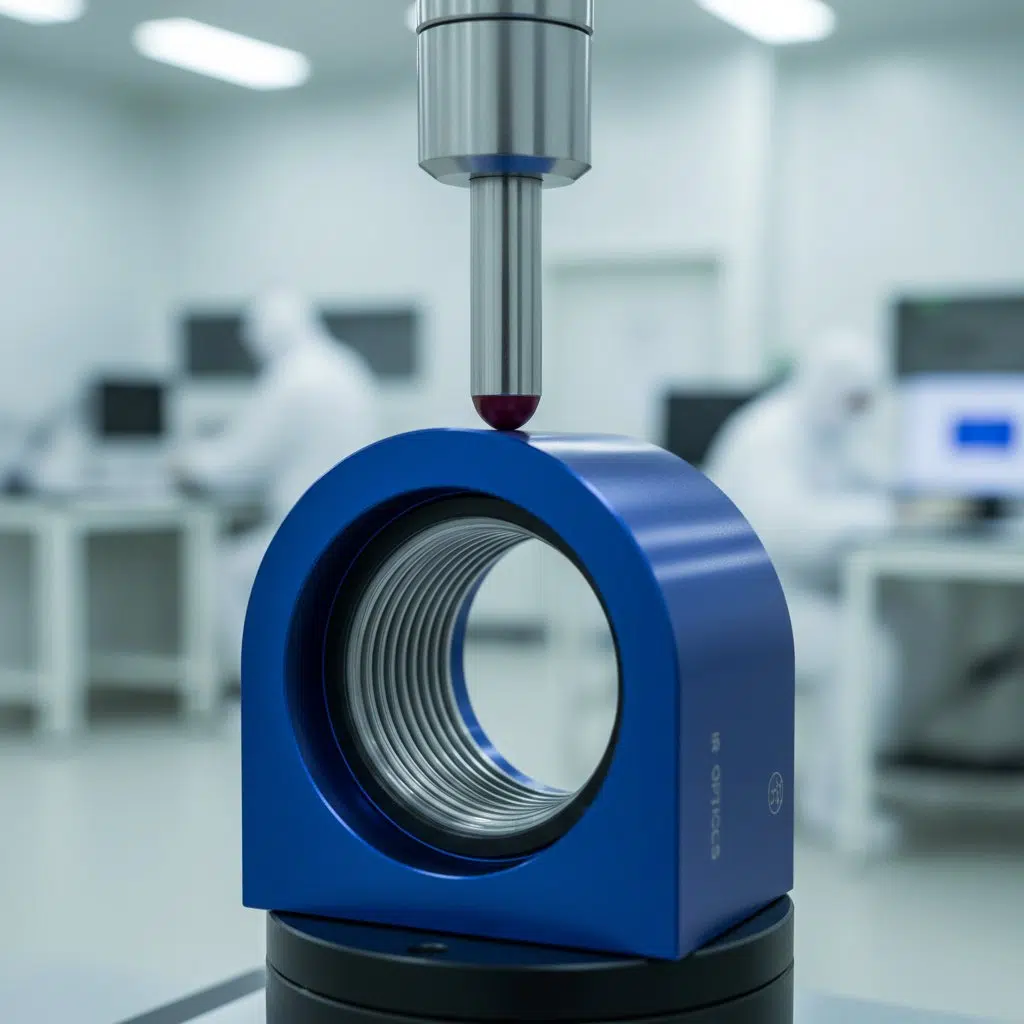
High-precision probes and optical measurement systems are used during and after finishing to verify the geometric accuracy of the keyboard cases. This ensures conformity to the CAD model.
This meticulous verification process guarantees that complex curves, angles, and hole positions are precisely executed. It underpins the reliability of our keyboard case machining process.
Meeting Exacting Standards for Fit & Function
The ability to consistently meet exacting standards for fit and function is a defining characteristic of high-quality CNC manufacturing. Every keyboard case must seamlessly integrate with its components.
This dedication to precision ensures that the end-user experiences a product that is not only visually stunning but also mechanically perfect. It is the culmination of the Custom Keyboard Case CNC journey.
| Surface Finish Parameter (Ra) | Description | Typical Application for Keyboard Cases |
|---|---|---|
| < 0.8 µm | Mirror-like, highly aesthetic, critical sealing surfaces. | Premium external surfaces, polished finishes. |
| 0.8 – 1.6 µm | Very smooth, good aesthetic and functional finish. | Standard external surfaces, areas requiring anodizing. |
| 1.6 – 3.2 µm | General machined finish, good for internal cavities. | Internal pockets, non-visible structural elements. |

Stage 5: Deburring & Surface Treatment Keyboard Case
Post-Machining Refinements for Cases
After the precision machining stages, aluminum keyboard cases undergo post-machining refinements to remove any residual burrs or sharp edges. This ensures safety, enhances aesthetics, and prepares the surface for further treatment.
This meticulous attention to detail transforms a machined component into a finished product, ready for end-user interaction. It is a critical step in the comprehensive keyboard case machining process.
Removing Burrs and Sharp Edges Manually
Skilled technicians carefully inspect and manually deburr delicate features and internal corners that automated processes might miss. This ensures a smooth, tactile feel and eliminates hazards.
This manual intervention guarantees that every edge and opening is perfectly finished, reflecting the commitment to a superior custom keyboard case. It highlights craftsmanship in the 6-stage CNC journey.
Automated Deburring Solutions for Efficiency
For high-volume production, automated deburring solutions such as vibratory finishing or robotic deburring can be employed. These methods offer consistency and efficiency for certain part geometries.
The choice of deburring method is optimized based on part complexity, material, and required surface finish. This blend of automation and manual care ensures optimal results for every CNC aluminum keyboard case.
Enhancing Aluminum Keyboard Case Aesthetics
Surface treatment is a transformative stage that not only protects the aluminum keyboard case but also defines its final aesthetic appeal. Options range from various anodizing colors to distinct blasting textures.
This stage allows for significant customization, enabling clients to achieve specific visual and tactile characteristics for their products. It is key to distinguishing a premium custom keyboard case CNC.
Anodizing and Blasting for Desired Finish
Anodizing creates a durable, corrosion-resistant, and aesthetically pleasing colored oxide layer on the aluminum surface. This process enhances both protection and visual appeal.
Bead blasting or sandblasting can be used to achieve a matte, textured finish that diffuses light and reduces fingerprints. These options provide diverse aesthetic choices for the CNC aluminum keyboard case.
Protecting and Coloring Your Keyboard Housing
Beyond aesthetics, surface treatments like anodizing significantly increase the hardness and wear resistance of the aluminum. This protects the keyboard housing from daily wear and tear.
With a wide spectrum of colors available, anodizing allows for complete design freedom to match brand aesthetics or create unique custom keyboard case CNC designs. It offers both function and form.
| Surface Treatment | Key Characteristics | Aesthetic Effect | Functional Benefit |
|---|---|---|---|
| Anodizing (Type II) | Thin, decorative, porous, can be dyed. | Wide range of colors, vibrant or subdued. | Corrosion resistance, moderate wear resistance. |
| Hard Anodizing (Type III) | Thicker, denser, harder, limited color range. | Often darker, more industrial appearance. | Excellent wear resistance, enhanced durability. |
| Bead Blasting | Abrasive blasting with glass beads. | Uniform matte, textured finish, non-reflective. | Reduces glare, provides tactile grip. |
| Polishing | Mechanical abrasion to smooth surface. | High-gloss, mirror-like finish. | Enhanced aesthetics, easy to clean. |

Stage 6: Inspection & Assembly Prep Keyboard Case
Ensuring Uncompromised Keyboard Case Quality
The final inspection stage is a critical gatekeeping process, ensuring that every CNC aluminum keyboard case meets or exceeds all specified quality standards before shipment. This step guarantees product integrity.
It involves a comprehensive evaluation of dimensions, aesthetics, and functionality, providing an objective assessment of the entire keyboard case machining process. Uncompromised quality is our promise.
CMM and Optical Inspection for Precision
Coordinate Measuring Machines (CMM) provide highly accurate, three-dimensional measurements of complex geometries, verifying critical tolerances to sub-micron precision. This is indispensable for high-accuracy parts.
Optical inspection systems offer non-contact measurement and surface defect detection, ensuring impeccable surface quality and feature integrity. These tools are central to our quality assurance for Custom Keyboard Case CNC.
Validating Every Dimension and Feature
Each custom keyboard case undergoes a rigorous validation process, comparing every manufactured dimension and feature against the original CAD specifications. This is a crucial step in the 6-stage CNC journey.
This meticulous check ensures that all holes, pockets, and mounting points are precisely positioned and sized, preventing any assembly issues or functional compromises. It guarantees exact replication of design.
Ready for Integration: Final Keyboard Case Checks
Beyond dimensional accuracy, final checks include assessing surface finish consistency, color uniformity (if anodized), and ensuring there are no hidden flaws. The goal is a perfect, ready-to-use product.
Any minor imperfections are identified and addressed, ensuring only flawless keyboard cases proceed to packaging. This comprehensive approach underscores our commitment to excellence.
Packaging and Shipping Best Practices
Proper packaging is essential to protect the finished CNC aluminum keyboard case from damage during transit. Custom inserts and protective materials are used to secure each part.
Our shipping logistics are optimized for timely and secure delivery, minimizing transit risks. This ensures your high-quality Custom Keyboard Case CNC arrives in pristine condition, ready for assembly.
Your Aluminum Keyboard Case, Delivered Flawlessly
The culmination of the 6-stage CNC journey is the delivery of a perfectly machined and finished aluminum keyboard case. It represents the successful transformation from concept to a tangible, premium product.
Our unwavering commitment to precision, quality, and transparent processes ensures that your vision is realized flawlessly. We deliver not just parts, but confidence and excellence.

Conclusion: Your Perfect Aluminum Keyboard Case
Key Insights: Mastering Keyboard Case CNC
Mastering the production of a high-quality CNC aluminum keyboard case hinges on a structured, multi-stage machining process. From initial design validation to final inspection, precision is non-negotiable.
This systematic approach guarantees not only dimensional accuracy but also the superior surface finishes and aesthetic appeal that define a premium product. It’s a journey of meticulous control and expertise.
The Value of a 6-Stage CNC Journey
Our comprehensive 6-stage CNC journey offers unparalleled value by ensuring consistency, reducing errors, and optimizing production efficiency. It provides a reliable pathway from concept to a finished custom keyboard case.
This structured process minimizes risks and maximizes the probability of achieving design intent flawlessly, every time. It represents a commitment to predictable, high-quality manufacturing outcomes.
Partnering for Keyboard Case Manufacturing Excellence
Choosing a manufacturing partner with deep technical expertise and a transparent keyboard case machining process is paramount. It ensures your projects benefit from proven methodologies and dedicated quality control.
Our factory-to-client approach provides direct control over every aspect of production, delivering high-quality Custom Keyboard Case CNC solutions. We are dedicated to translating your designs into perfection.
Take Action: Transform Your Keyboard Vision
Ready to elevate your keyboard design with unparalleled precision and a truly transparent manufacturing partner?
Contact us today for a detailed consultation and a transparent quote on your custom aluminum keyboard case project. Experience the difference our 6-stage CNC journey makes.
FAQ Section
Why is aluminum chosen for keyboard cases?
Aluminum is selected for CNC aluminum keyboard case manufacturing due to its exceptional strength-to-weight ratio, excellent machinability, and superior aesthetic potential. It also offers good thermal conductivity and corrosion resistance.
These properties allow for the creation of intricate designs with a premium feel, making it ideal for high-end custom keyboard cases. It ensures durability and a satisfying tactile experience.
What impacts CNC keyboard case cost?
The cost of a custom keyboard case CNC is influenced by several factors, including design complexity, material choice, required tolerances, and surface finish. Volume and lead time also play significant roles in pricing.
Optimizing designs for manufacturability and choosing appropriate specifications can significantly impact the overall cost without compromising quality. Our transparent pricing reflects these considerations clearly.
How long does the 6-stage CNC journey take?
The duration of the 6-stage CNC journey for a keyboard case depends heavily on design complexity, required production volume, and specific surface treatments. Prototypes typically take less time than large-batch production.
We provide clear lead time estimates after design review, ensuring transparency throughout the entire keyboard case machining process. Our optimized workflows aim for efficient and timely delivery.

 English
 German
 Turkish
 Spanish
 French