


Why CNC Delivers Excellent Part Finishes
Why can CNC provide excellent part surface finish? Precision CNC machining achieves superior surface finishes due to unmatched machine rigidity, advanced control systems, optimized tooling, and meticulous process controls, offering significant benefits for various applications.
Is inconsistent surface finish silently undermining your product’s performance or inflating your manufacturing costs? Achieving precise surface quality is critical for component functionality, longevity, and aesthetics. Many manufacturers struggle to consistently meet stringent surface finish requirements, leading to expensive post-processing or compromised product integrity.
At ly-machining, our deep technical expertise and state-of-the-art CNC manufacturing processes solve these challenges. We understand the intricate relationship between machine capabilities, tooling, materials, and process control.
Discover how our approach to computer numerical control services ensures the flawless surfaces your designs truly demand. This guide will reveal the core technical advantages of CNC machining.

The Foundation: CNC Machine Precision
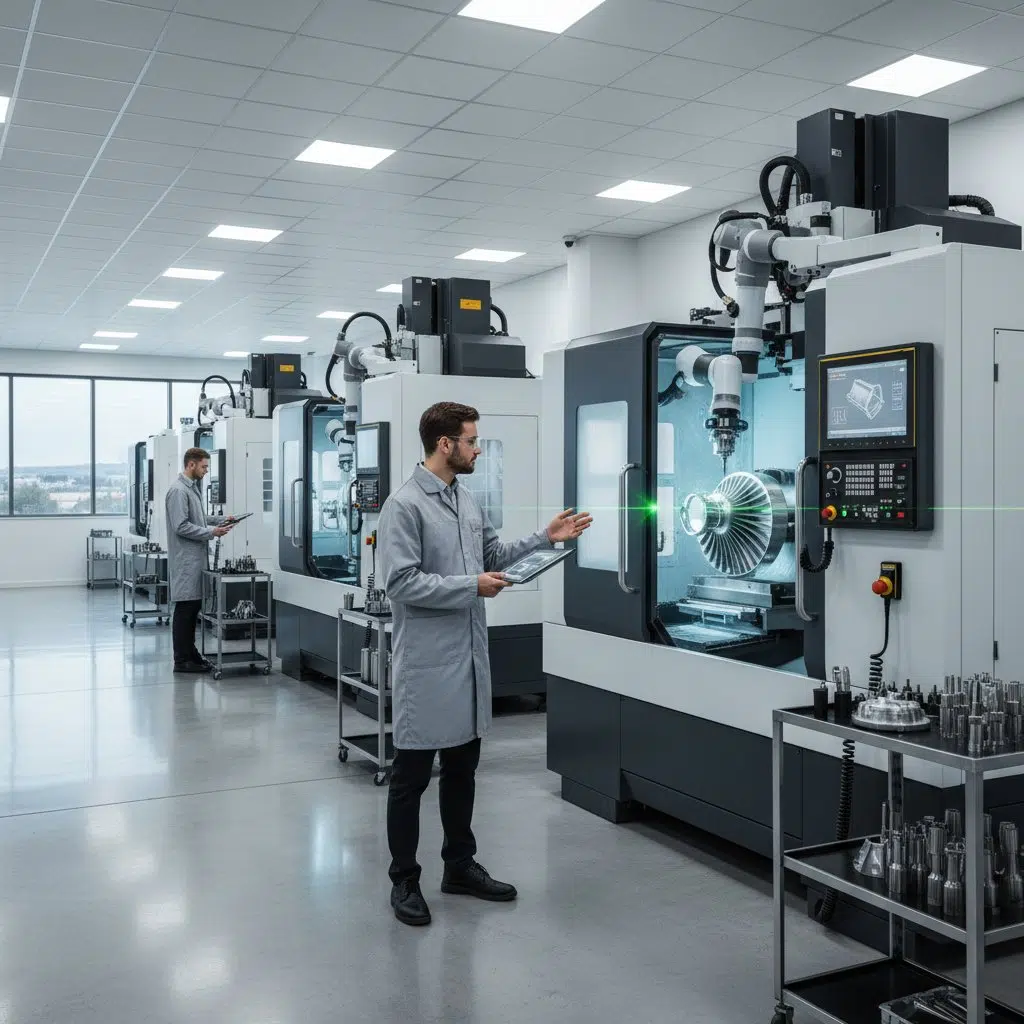
The fundamental capability of CNC machining to produce excellent surface finishes begins with the machine itself. These systems are engineered for extreme accuracy and repeatability. They represent a significant leap from traditional machining methods.
Our advanced computer numerical control equipment forms the bedrock of our high-quality output. This inherent precision minimizes variations that can degrade surface quality.
Rigid Machine Structure for why CNC machining
The structural integrity of a CNC machine is paramount for achieving superior surface finishes. High rigidity directly translates to reduced vibration and deflection during the cutting process. In our experience, even microscopic deflections can lead to chatter marks and an undesirable surface texture.
Our machines feature heavy, vibration-dampening bases, often made from cast iron or polymer concrete. This robust construction minimizes resonant frequencies, ensuring stable cutting conditions. This is a primary reason why CNC machining excels in precision.
Table 1: Impact of Machine Rigidity on Surface Finish
| Rigidity Level | Vibration | Surface Finish (Ra) |
|---|---|---|
| High | Minimal | < 0.8 µm (Excellent) |
| Medium | Moderate | 0.8 – 3.2 µm (Good) |
| Low | Significant | > 3.2 µm (Poor) |
Advanced Control Systems enhance CNC machining
Modern CNC machines are equipped with sophisticated control systems that orchestrate every movement with incredible precision. These systems utilize high-speed processors and advanced algorithms. They manage multi-axis interpolation seamlessly.
This precise control over machine kinematics allows for incredibly smooth and consistent tool paths. Such accuracy minimizes abrupt changes in direction or speed that could otherwise affect the surface finish. These systems significantly enhance CNC machining capabilities.

High-Resolution Motion of CNC machining
The motion control systems within CNC machines employ high-resolution encoders and precision ball screws. These components ensure that the cutting tool moves exactly as commanded by the program. We routinely work with micron-level positional accuracy.
This fine movement capability allows for very small step-overs and consistent cutting depths, crucial for achieving very low Ra (roughness average) values. The ability to control motion at this level is a key benefit of CNC machining. It directly contributes to superior surface quality.
Optimizing Tooling for Superior Surface Finish
Beyond the machine’s inherent precision, the choice and application of cutting tools are critical. A finely tuned tooling strategy is essential for achieving the best possible surface finishes in CNC machining. Our engineers meticulously plan every detail.
The interaction between the cutting tool and the workpiece largely dictates the final surface texture. This is where a deep understanding of metallurgy and cutting mechanics becomes invaluable.
Cutting Tool Selection in CNC machining
Selecting the correct cutting tool material, geometry, and coating is paramount. Factors like rake angle, clearance angle, and nose radius profoundly impact chip formation and surface finish. For example, a larger nose radius can produce a smoother finish but may increase cutting forces.
We often employ specialized tools such as polished inserts, PCD (polycrystalline diamond), or CBN (cubic boron nitride) tools for finishing operations on specific materials. These tools maintain sharp edges and resist wear, ensuring consistent material removal. Their use is crucial for the benefits of CNC machining.
Table 2: Cutting Tool Parameters for Fine Finishes
| Parameter | Optimal Choice for Fine Finish | Effect on Surface |
|---|---|---|
| Tool Material | Carbide, PCD, CBN | Hardness, wear resistance |
| Nose Radius | Larger (e.g., > 0.4 mm) | Smoother, but higher force |
| Edge Preparation | Honed, Polished | Reduces micro-chipping |
| Coating | TiAlN, AlTiN, Diamond-like Carbon | Friction, heat reduction |
Tool Path Optimization: Benefits of CNC machining
Intelligent tool path generation is a cornerstone of achieving superior surface finishes. Our CAM software allows us to create highly optimized tool paths that minimize tool engagement variations. Constant cutting forces and uniform chip loads are our goals.
Techniques like trochoidal milling, constant scallop height machining, and spiral paths are routinely employed. These methods avoid abrupt changes in cutting direction or depth. This directly prevents inconsistencies and tool deflection. Tool path optimization highlights the benefits of CNC machining.

Coolant & Lubrication in CNC machining
The effective application of cutting fluid significantly influences surface finish. Coolants perform several vital functions: dissipating heat, lubricating the cutting interface, and flushing away chips. Heat build-up can lead to material distortion and tool wear, both detrimental to surface quality.
We utilize advanced coolant delivery systems, including high-pressure through-spindle coolant, to ensure optimal chip evacuation and temperature control. Proper lubrication reduces friction between the tool and workpiece, preventing built-up edge (BUE) formation. This contributes significantly to a clean, smooth cut.

Process Control for Consistent CNC Finish
Achieving an excellent surface finish is not just about the machine and tooling; it’s about meticulous process control. Every parameter must be precisely managed and monitored. This ensures repeatability and consistency, hallmarks of our manufacturing.
Our commitment to ISO 9001 and AS9100 standards means every step is controlled. This disciplined approach underpins why CNC machining delivers superior and consistent results.
Parametric Control for why CNC machining
Precisely controlling machining parameters like spindle speed, feed rate, and depth of cut is critical. These variables must be optimized for the specific material and desired surface finish. An incorrect feed rate, for instance, can lead to excessive tool marks.
Our engineers leverage extensive experience and empirical data to define the ideal parameters for each job. This granular control minimizes cutting forces and thermal effects, which directly impact the final surface quality. This is a core reason why CNC machining is so effective.
Vibration Dampening for CNC machining
Even with a rigid machine, secondary vibrations can occur due to cutting forces or spindle imbalances. We employ various techniques to actively or passively dampen these vibrations. This might include dynamic spindle balancing or specialized workholding fixtures.
Fixture design plays a crucial role, ensuring the workpiece is held securely to prevent movement during machining. Minimizing these micro-vibrations is essential for achieving ultra-smooth surfaces. This continuous effort is part of our commitment to excellence.

Metrology & Inspection in CNC machining
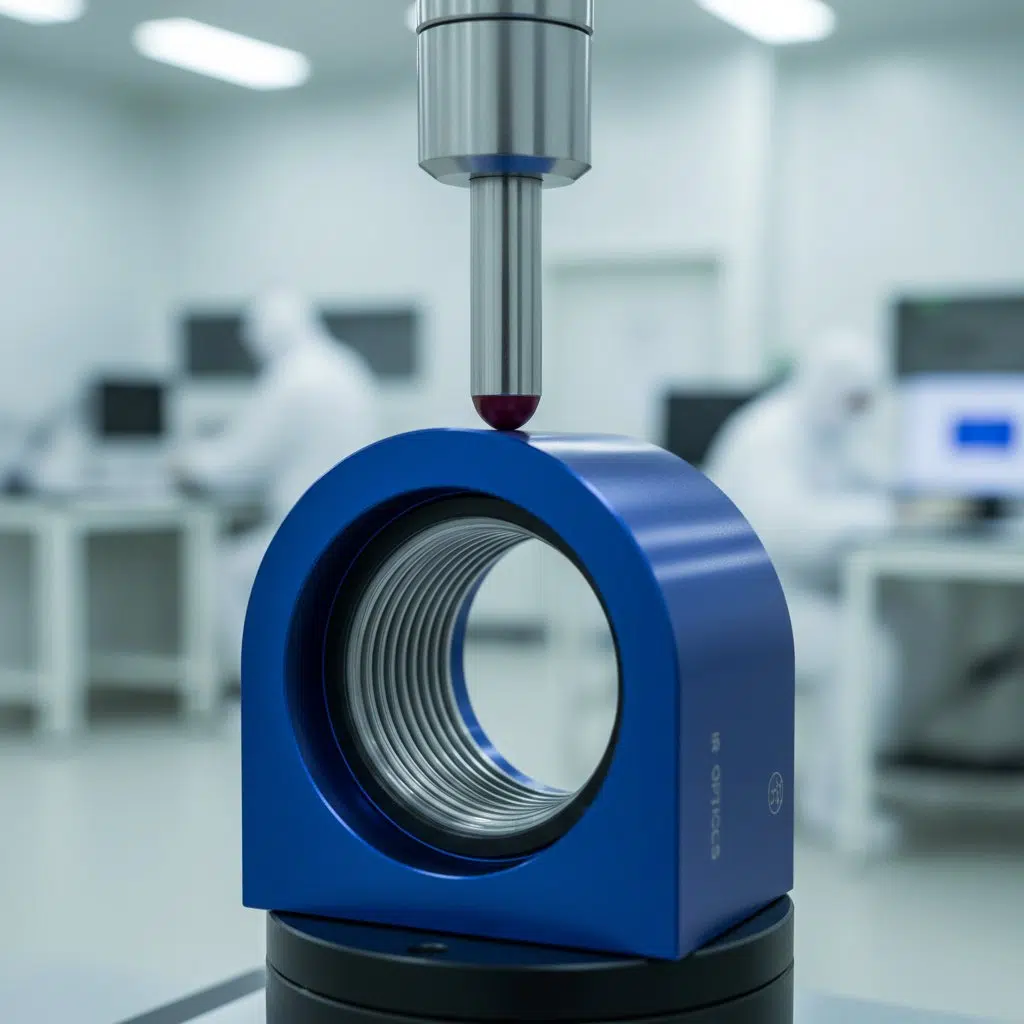
The ability to accurately measure and verify surface finish is as important as the ability to create it. We use advanced metrology equipment to validate our processes. This includes profilometers, both contact and non-contact, for precise Ra (Roughness Average) measurements.
In-process and post-process inspection are integral to our quality assurance protocols. By constantly monitoring and adjusting, we maintain tight control over surface quality. This ensures every part meets the exact specifications. Our rigorous inspection confirms the benefits of CNC machining.

Material Science & CNC Surface Quality
The inherent properties of the material being machined play a significant role in the achievable surface finish. Different materials react uniquely to cutting forces and heat. Our expertise in material science is key to predicting and controlling outcomes.
Understanding these interactions allows us to tailor our CNC machining processes accordingly. This ensures optimal results across a wide range of engineering materials.
Material Properties and their impact on CNC machining
Factors like material hardness, microstructure, thermal conductivity, and ductility all influence how a material responds to cutting. Softer, more ductile materials can sometimes be prone to built-up edge and tearing, while very hard materials can cause rapid tool wear.
Our engineers select specific cutting parameters and tools based on these properties. For instance, specific feed rates are crucial to achieve chip-breaking and prevent material smearing. This deep understanding is why CNC machining can achieve such varied and high-quality finishes.
Table 3: Material Properties and Achievable Surface Finish
| Material Type | Machinability | Typical Achievable Ra (µm) | Notes |
|---|---|---|---|
| Aluminum Alloys | Excellent | 0.4 – 1.6 | Ductile, good for polishing |
| Stainless Steels | Good – Fair | 0.8 – 3.2 | Prone to work hardening |
| Titanium Alloys | Challenging | 0.8 – 3.2 | High strength, low thermal conductivity |
| Tool Steels | Good | 0.4 – 1.6 | Hard, requires robust tools |
Specific Materials for high finish CNC machining applications
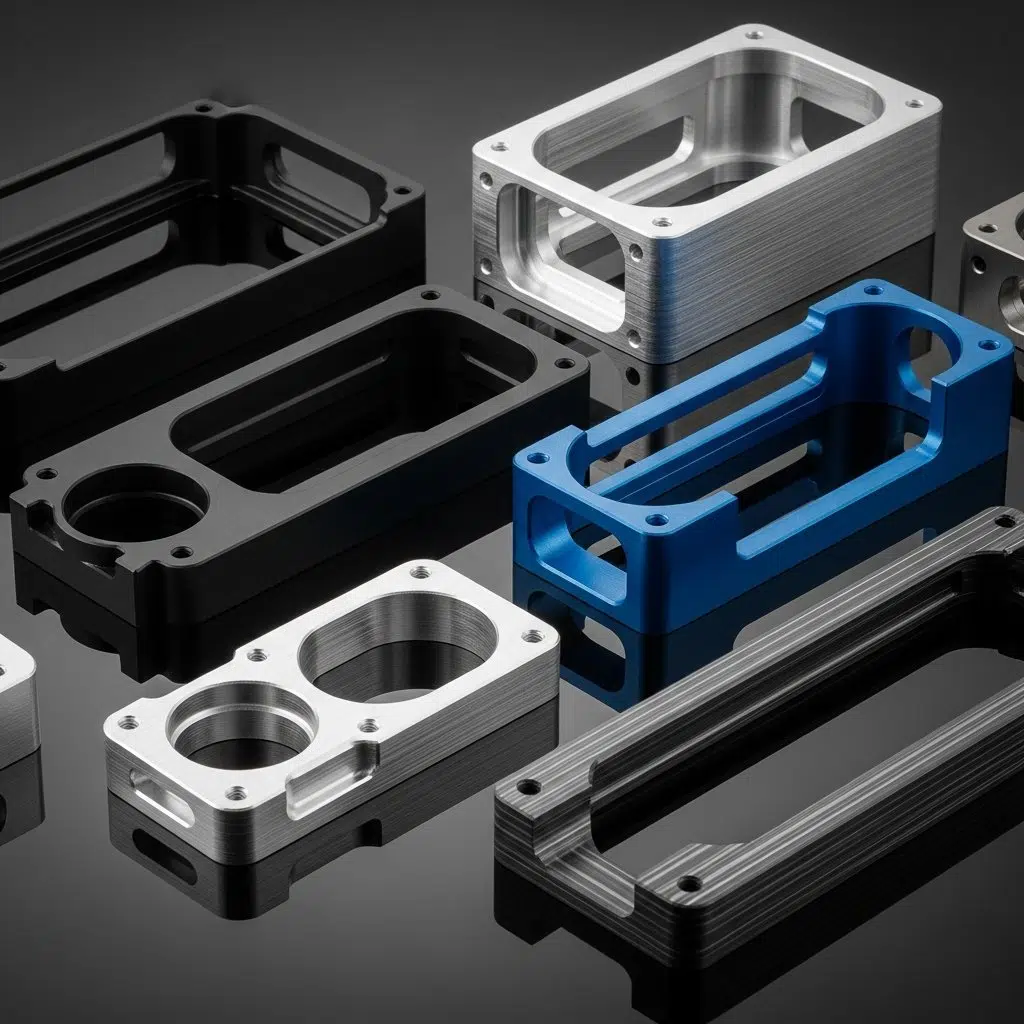
For applications demanding the highest surface finishes, certain materials lend themselves well to precision CNC machining. Materials like specific grades of aluminum, brass, and some stainless steels can achieve very fine, even mirror-like, finishes with the right process.
Conversely, materials known for their toughness or abrasiveness require specialized approaches. Our experience covers a vast array of materials, ensuring optimal results irrespective of the challenge. This capability extends the range of CNC machining applications.
Why Excellent CNC Finish Matters for Parts
The benefits of a superior CNC surface finish extend far beyond aesthetics. It profoundly impacts the performance, longevity, and overall cost-effectiveness of a component. This is a critical consideration for any product design.
Investing in high-quality surface finishes upfront can yield significant returns downstream. It enhances the value and reliability of the final product.
Enhanced Performance: Benefits of CNC machining
A smooth surface finish is critical for parts with dynamic movement, such as bearings, pistons, and gears, as it reduces friction and wear. This directly translates to improved efficiency and extended product lifespan. In fluidic systems, a superior finish prevents leaks and optimizes flow.
In optics or medical devices, an extremely smooth surface is essential for functionality and biological compatibility. The benefits of CNC machining are clear here. Achieving these finishes reliably is a key differentiator.
Reduced Post-Processing costs in CNC machining
One of the most significant economic advantages of achieving a superior finish directly from CNC machining is the reduction or elimination of costly secondary operations. Manual polishing, grinding, or lapping processes are time-consuming and labor-intensive. These processes also introduce potential for error.
By delivering parts with the specified finish directly from the machine, we save our clients significant time and money. This streamlined approach highlights the efficiency benefits of CNC machining. It lowers overall manufacturing costs.
Aesthetic and Functional CNC machining applications
For consumer products, high-end enclosures, or visible components, surface finish is often a primary aesthetic consideration. A pristine, uniform finish conveys quality and precision. This directly impacts brand perception.
Functionally, a specific surface texture might be required for coating adhesion, paint application, or even haptic feedback. Our precise control allows for tailored finishes. This versatility expands the range of CNC machining applications.

Our Expertise in Achieving Top CNC Finish
At ly-machining, our commitment to delivering superior surface finishes is embedded in our operational philosophy. We are not just a service provider; we are a source manufacturer with deep technical acumen. Our approach offers distinct advantages.
This expertise, combined with transparent pricing, ensures you receive unparalleled value. We pride ourselves on being a reliable and knowledgeable partner.
Source Manufacturer Advantage for CNC machining
As a source manufacturer, we maintain complete control over every stage of the machining process, from material selection to final inspection. This end-to-end oversight is critical for consistently achieving the most demanding surface finish specifications. We don’t rely on third parties.
This direct control allows for tighter tolerances, faster iterations, and a more robust quality assurance system. It is a fundamental reason why CNC machining from our facility offers such high quality.
Technical Expertise in why CNC machining excels
Our team of engineers and machinists possesses extensive, hands-on experience in advanced CNC techniques. We specialize in optimizing processes for challenging materials and complex geometries. This specialized knowledge is constantly updated through continuous training.
We understand the subtle nuances that distinguish a good finish from an exceptional one. Our problem-solving capabilities leverage years of practical application. This demonstrates why CNC machining excels under our guidance.

Transparent Pricing for high-quality CNC machining
We believe in clear and honest communication regarding costs. Our transparent pricing model breaks down the elements contributing to the final price. This includes material, machining time, tooling, and quality control. There are no hidden fees.
This transparency builds trust and allows our clients to make informed decisions. We aim to provide cost-effective solutions without compromising on the quality of the finish.
Conclusion: Elevating Your Products with Superior CNC Finish
The ability of CNC machining to deliver excellent part surface finishes is a testament to the synergistic interplay of advanced machine design, optimized tooling strategies, and rigorous process control. These elements collectively enable the creation of components that not only meet but often exceed expectations.
From enhanced performance and reduced post-processing costs to superior aesthetics, the benefits of CNC machining are undeniable. Choosing a partner with the expertise to harness these capabilities is paramount.
Partnering for Precision: Your CNC machining solution
At ly-machining, we leverage our source manufacturer advantage and deep technical knowledge. We consistently deliver the superior surface quality your critical applications demand. Our commitment to precision is unwavering.
We are ready to translate your intricate designs into reality, ensuring every component meets the highest standards. Experience the difference that true expertise makes.
Ready to Experience the Benefits of CNC machining?
Unlocking the full potential of your product designs requires components with uncompromising surface integrity. Our team is equipped to provide solutions. We aim to elevate your manufacturing capabilities.
Contact us today to discuss your project requirements and discover how our precision CNC machining services can benefit you. We are eager to demonstrate our commitment.
Case Study: Enhancing Medical Device Performance with Ultra-Smooth Surfaces
Problem: A client in the medical device sector required a stainless steel component for a new surgical instrument. This part demanded an exceptionally smooth surface finish (Ra < 0.2 µm) to minimize friction and ensure biocompatibility, without any post-machining polishing which could introduce contaminants. Their previous supplier struggled with consistency.
Our Solution: Our engineers at ly-machining collaborated closely with the client. We selected a specific grade of medical-grade stainless steel known for its machinability. We then devised a multi-stage CNC machining process. This included ultra-fine finishing passes using polished carbide inserts, precise tool path optimization to eliminate witness marks, and flood cooling with specialized biocompatible coolant. In-process metrology using a non-contact profilometer ensured real-time adherence to the strict Ra specification.
Result: We successfully delivered the stainless steel components with a consistent surface finish of Ra < 0.18 µm, exceeding the client’s stringent requirements. This enabled the client to directly integrate the parts without any additional post-processing, significantly reducing their production costs and accelerating time-to-market for their innovative surgical instrument. The enhanced performance and reliability of the instrument were directly attributed to the superior surface quality achieved through our precision CNC machining.
Call to Action: Ready to elevate your product with components that meet the highest standards for surface finish and precision? Contact our technical experts today for a transparent quote and a personalized consultation. Let our deep technical expertise become your competitive advantage.
FAQ Section
What is Ra value in surface finish?
Ra (Roughness Average) is a common parameter used to quantify surface texture. It measures the arithmetic average of the absolute values of the profile deviations from the mean line. A lower Ra value indicates a smoother surface.
Typically, Ra values are expressed in micrometers (µm) or microinches (µin). Our CNC processes can achieve very low Ra values, often below 0.8 µm. This is crucial for many high-performance applications.
Can CNC achieve a mirror-like finish?
Yes, with the right combination of machine capabilities, tooling, and process parameters, CNC machining can achieve mirror-like finishes. This usually involves ultra-fine finishing passes and specialized tools.
Materials like aluminum, brass, and certain steels are particularly amenable to such high-gloss finishes. It often minimizes or eliminates the need for manual polishing.
How does material affect surface finish?
Material properties like hardness, ductility, and grain structure significantly influence the achievable surface finish. Softer, ductile materials can sometimes tear or form built-up edges. Harder materials may cause faster tool wear.
Our engineers select optimal cutting parameters and tool geometries based on each material’s unique characteristics. This ensures the best possible surface quality for diverse materials.
 English
 German
 Turkish
 Spanish
 French